Discover the University of Sydney acceptance rate, rankings, tuition, scholarships, and admission requirements for international students in 2026.
University of Sydney, Australia
The University of Sydney is one of Australia’s oldest and most respected universities, and yes, getting admitted can be competitive depending on your course, academic background, and nationality. While the university has a relatively moderate overall acceptance rate estimated between 30% and 40% for many international programs, highly selective degrees such as medicine, law, dentistry, psychology, and engineering are far harder to enter. In recent years, global demand for Australian education has climbed sharply, especially after Australia reopened borders fully following pandemic-era restrictions. That surge pushed applications higher across major universities, including the University of Sydney, making admission standards more demanding than they were five or six years ago. Still, the university remains more accessible than elite institutions such as University of Oxford or Harvard University, particularly for students with strong grades and a well-prepared application. If you understand the admission process early, meet the English requirements, and choose the right course strategically, your chances improve significantly.
Founded in 1850, the University of Sydney stands like an old sandstone cathedral in the heart of Australian higher education. It belongs to Australia’s prestigious Group of Eight universities, a coalition known for research intensity, academic reputation, and global partnerships. Over the past decade, the institution has climbed steadily in international rankings, attracting students from Asia, Africa, Europe, and the Middle East. According to global university rankings published by organizations such as QS World University Rankings and Times Higher Education, the university consistently ranks among the world’s top universities. That reputation naturally affects admission competition. A university with global prestige becomes a magnet. Students from Nigeria, India, China, Pakistan, Canada, and the United Kingdom all compete for limited seats. The result is simple: stronger applicants stand out, while average applications often disappear quietly into the crowd.
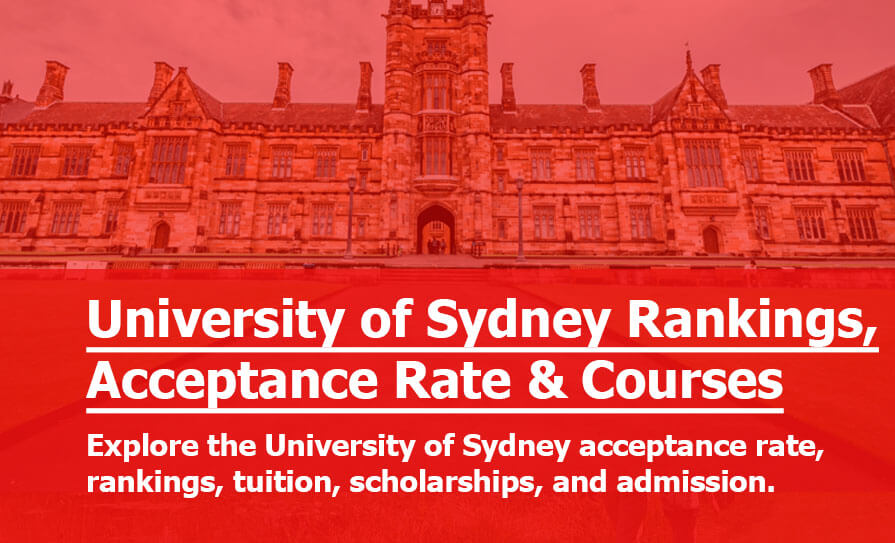
What makes the University of Sydney particularly attractive is its blend of tradition and modern opportunity. The campus architecture feels almost European, with Gothic-style buildings and wide courtyards that resemble old British institutions. Yet inside those walls, students work with cutting-edge research laboratories, artificial intelligence systems, biotechnology projects, and global business networks. Employers across Australia respect the university’s graduates strongly, especially in finance, medicine, engineering, public policy, and computer science. International students often see the institution as a pathway not only to education but also to migration opportunities and career stability in Australia. That practical value explains why applications rose noticeably between 2021 and 2025. As tuition fees globally continue climbing, many students still consider Australia worthwhile because of post-study work opportunities and comparatively safer immigration pathways.
Admission trends have shifted over the years. Around a decade ago, international entry into many Australian universities was considerably easier. Student demand existed, but competition was less intense than it is today. However, after the global rise in international education demand and Australia’s increasing reputation for quality universities, institutions like the University of Sydney became more selective. Some faculties tightened English-language requirements. Others raised GPA expectations or introduced portfolio reviews and interviews. Courses such as medicine and dentistry now require standardized testing alongside excellent academic records. Meanwhile, business and humanities programs generally remain more flexible. Understanding these differences matters because many students mistakenly assume one acceptance rate applies to the entire university. In reality, acceptance rates vary sharply between departments and degree levels.
For international students, especially those from developing countries, the dream of studying at the University of Sydney often carries emotional weight. Families invest savings, students spend years preparing documents, and many see the acceptance letter as a life-changing bridge toward broader opportunities. Yet ambition alone rarely wins admission. Universities evaluate consistency, preparation, English proficiency, academic rigor, and sometimes extracurricular achievement. A student with average grades but strong leadership experience may still compete effectively in some programs, while another with excellent scores but weak communication skills may struggle. That balance between numbers and personal readiness shapes modern admissions more than many applicants realize. The process resembles a long-distance race more than a sprint. Careful preparation, timing, and persistence often matter as much as raw intelligence.
University of Sydney Acceptance Rate Overview
| Category | Estimated Acceptance Rate |
|---|---|
| Overall University Acceptance Rate | 30%–40% |
| Medicine & Dentistry | Below 10% |
| Law Programs | 15%–20% |
| Engineering | 20%–30% |
| Business School | 35%–45% |
| Humanities & Arts | 40%–50% |
Why the University of Sydney Is So Popular
The University of Sydney attracts students because it combines global recognition with strong career outcomes. Unlike smaller institutions that remain mostly regional, Sydney’s reputation travels across continents. Employers in Asia, Europe, Africa, and North America recognize the university’s name immediately. That recognition becomes valuable after graduation, especially in industries where institutional prestige influences hiring decisions. Students pursuing banking, international business, medicine, or research often choose globally ranked universities because reputation can open doors years later. In many ways, a degree from the University of Sydney functions like a passport stamp recognized worldwide. The university’s alumni network also stretches across governments, multinational companies, and research institutions, giving graduates access to powerful professional circles.
Location also plays a huge role in the university’s appeal. Sydney is Australia’s largest and most internationally connected city. For many students, studying in Sydney means more than attending lectures. It means living in an economic hub filled with internships, multinational corporations, tourism, and cultural diversity. International students can work part-time while studying, gaining real-world experience alongside academic knowledge. That combination of study and employment appeals strongly to families investing heavily in international education. Compared with smaller university towns, Sydney offers broader career exposure and stronger networking opportunities. The city itself almost becomes an extension of the classroom.
Research strength further boosts the university’s attractiveness. The institution invests heavily in medicine, public health, artificial intelligence, sustainability, climate science, and engineering innovation. During the COVID-19 era, Australian universities involved in health research gained greater international visibility. The University of Sydney benefited from that attention significantly. Students increasingly want universities connected to real-world innovation rather than purely theoretical teaching. Research partnerships with hospitals, government agencies, and global companies give Sydney students access to advanced projects and professional experiences early in their academic journey. That practical exposure often becomes a deciding factor for ambitious international applicants.
Another reason demand continues growing is Australia’s relatively welcoming post-study visa pathway compared with some competing countries. Over the past few years, policy uncertainty in places like the United Kingdom, Canada, and parts of Europe caused many students to reconsider destination choices. Australia positioned itself as a stable alternative with strong education quality and post-graduation work opportunities. The University of Sydney naturally benefited because it already possessed a prestigious global reputation. Students looking for long-term migration options frequently prioritize universities located in economically strong cities, and Sydney fits that profile perfectly. Education decisions today are rarely academic alone. They are deeply tied to career planning, immigration goals, and financial survival.
Social media and digital rankings have also amplified the university’s popularity dramatically. Ten years ago, students relied mainly on education agents or printed university guides. Today, TikTok campus tours, YouTube vlogs, Reddit discussions, and Instagram posts shape perceptions instantly. A single viral dormitory video or graduation clip can influence thousands of applicants globally. The University of Sydney’s iconic architecture and vibrant campus life photograph beautifully, making it especially visible online. That constant exposure fuels aspiration. Students see real people living the experience and begin imagining themselves there too. Modern university branding now functions almost like global entertainment marketing, and Sydney plays that game exceptionally well.
University of Sydney Acceptance Rate Compared With Previous Years
Admission competitiveness at the University of Sydney has not remained static. The university became progressively more selective over the last decade due to rising global demand and increased international visibility. Between 2015 and 2019, admission standards remained relatively steady for many programs, particularly in arts and business fields. International recruitment expanded aggressively during that period because Australian universities depended heavily on overseas tuition revenue. Students with decent grades and English proficiency often secured admission without extreme competition. However, elite programs such as medicine and law already maintained strict standards long before broader selectivity increased.
The pandemic years created unusual fluctuations in admissions. During 2020 and parts of 2021, border closures disrupted international mobility across Australia. Many students deferred enrollment or chose alternative destinations temporarily. Universities responded by offering online flexibility and adjusting recruitment strategies. Some courses became easier to enter briefly because overall student mobility dropped worldwide. Yet once borders reopened, demand returned like a flood breaking through a dam. Deferred applicants, new applicants, and international demand collided simultaneously. That sudden surge intensified competition dramatically between 2022 and 2025. Universities began receiving enormous application volumes from countries experiencing economic instability or visa restrictions elsewhere.
The University of Sydney also raised academic expectations in several faculties during recent years. STEM fields, health sciences, and research-intensive postgraduate programs particularly tightened standards. Students applying for engineering, data science, medicine, and law increasingly needed stronger GPAs and higher English-language scores. Some departments introduced more rigorous screening systems to manage rising application numbers. Scholarships became more competitive too, especially those covering full tuition or living expenses. As global inflation increased education costs, scholarship demand climbed sharply among international students from middle-income countries.
Here is a simplified comparison of estimated competitiveness trends over time:
| Year | Estimated Overall Acceptance Trend |
|---|---|
| 2015 | Moderately Competitive |
| 2018 | Competitive |
| 2020 | Temporarily Less Competitive |
| 2022 | Highly Competitive |
| 2024–2026 | Very Competitive in Top Programs |
Another important factor affecting acceptance trends is the global perception of Australian education quality. Rankings matter enormously today. When universities climb in QS or Times Higher Education rankings, applications often rise immediately afterward. The University of Sydney benefited strongly from this effect. International students searching online for “best universities in Australia” almost always encounter Sydney near the top. Increased visibility naturally increases competition. In many ways, university admissions behave like economics. When demand rises faster than available seats, selectivity increases. That simple principle explains why some programs now reject applicants who might easily have gained admission years earlier.
Is It Hard to Get Into the University of Sydney?
Yes, getting into the University of Sydney can be difficult, but difficulty depends heavily on the course you choose. Many students hear the university’s prestigious reputation and assume every program is nearly impossible to enter. That is not entirely true. Degrees such as medicine, veterinary science, dentistry, and law are extremely competitive because they receive far more applications than available seats. These programs often require exceptional academic scores, interviews, entrance exams, and evidence of leadership or community involvement. Meanwhile, some humanities, education, and social science programs maintain broader entry pathways. Students with strong but not elite academic profiles still stand reasonable chances in those fields.
International applicants sometimes misunderstand how Australian admissions work compared with American or British systems. Australian universities place enormous emphasis on academic performance and qualification equivalency. Your grades matter deeply. Extracurricular activities can help, but they rarely compensate for weak academics in competitive programs. A student with excellent WAEC, A-levels, IB scores, or strong undergraduate results usually has a clearer advantage than someone relying mostly on extracurricular achievements. That academic-first approach surprises many students accustomed to holistic admissions systems elsewhere. Understanding this early helps applicants prepare more strategically.
English proficiency requirements also create challenges for many students. The University of Sydney accepts tests such as IELTS, TOEFL, and PTE, but required scores vary by faculty. Competitive programs often demand higher language scores than general university minimums. Strong English matters because university coursework involves research papers, presentations, academic discussions, and technical reading. Admissions officers want confidence that international students can succeed academically after arrival. Weak English results can therefore damage otherwise solid applications. Many rejected students underestimate this factor completely.
Financial readiness quietly influences the process too. Although universities do not always frame admissions this way publicly, international study requires proof of financial capability. Tuition fees, accommodation, insurance, transport, and living expenses in Sydney are expensive. Students applying without realistic funding plans often face visa complications later. Australian immigration authorities also examine whether applicants can genuinely support themselves during study. A strong admission offer means little if visa approval fails afterward. Smart applicants therefore prepare academic and financial strategies together rather than separately.
Still, students should not view the University of Sydney as unreachable. Every year, thousands of international students gain admission successfully. The key difference usually lies in preparation quality. Strong grades, accurate documentation, early applications, good English scores, and thoughtful course selection dramatically improve outcomes. Too many students rush applications carelessly or rely entirely on agents without understanding requirements themselves. The students who succeed most often treat the process like building a house brick by brick. They research carefully, ask questions early, and prepare months in advance rather than weeks.
University of Sydney Admission Requirements
The admission requirements for the University of Sydney depend heavily on the level of study and the faculty you choose, but some core expectations remain consistent across most programs. International students must first prove they meet the university’s academic standards through recognized secondary school qualifications or undergraduate degrees. Applicants from Nigeria, India, Ghana, Pakistan, and other international systems are assessed through equivalency frameworks that compare local qualifications to Australian standards. For undergraduate entry, students may use WAEC, NECO, A-levels, International Baccalaureate, or foundation programs depending on the course. Postgraduate applicants usually need a recognized bachelor’s degree with competitive grades. Selective faculties often require stronger GPAs than the university minimum. Medicine, dentistry, architecture, and business analytics programs sometimes request portfolios, interviews, or additional testing alongside academic records.
English-language proficiency is another major requirement, and many applicants underestimate how important this stage can be. The university accepts IELTS, TOEFL iBT, Pearson PTE Academic, and a few other recognized tests. However, required scores differ significantly by course. For example, health sciences and law programs usually demand higher language proficiency because communication precision matters deeply in those professions. A student may technically meet the minimum score yet still struggle in competitive selection if other applicants perform substantially better. Over the years, English expectations have quietly risen because universities want students capable of handling advanced research, presentations, and academic writing from the beginning. Many successful applicants today submit IELTS scores above 7.0 even when minimum requirements are slightly lower. Strong communication skills can subtly strengthen an application beyond raw grades.
Documentation plays a larger role than many students realize. Universities in Australia operate with structured systems, and incomplete applications often face delays or rejection outright. International students typically need academic transcripts, graduation certificates, passport identification pages, proof of English proficiency, recommendation letters for postgraduate study, and a statement of purpose for certain programs. Some faculties may request resumes or work experience documentation as well. A surprisingly common mistake involves students submitting unclear scanned documents or inconsistent personal information across forms. Something as small as a spelling mismatch between documents can create complications during processing. Applicants who prepare organized, professionally formatted submissions often move through the process more smoothly than those rushing at the final moment.
Financial preparation has become increasingly important in recent years because of rising living costs in Australia. Sydney consistently ranks among the world’s more expensive cities for international students. Tuition alone can range from moderate to extremely high depending on the faculty, especially for medicine, business, and engineering. Beyond tuition, students must budget for accommodation, health insurance, transport, books, food, and emergency expenses. Australian student visa rules also require evidence that applicants can financially support themselves. Immigration officers examine these documents carefully because Australia wants genuine students, not individuals attempting to misuse education pathways for irregular migration. Students who fail to demonstrate financial stability sometimes encounter visa refusals even after receiving admission offers.
Timing also matters more than many applicants expect. International students often damage their own chances by applying too late, especially for competitive programs and scholarships. The University of Sydney operates within structured semester deadlines, and some faculties close applications months before classes begin. Scholarship deadlines are frequently even earlier. Students who begin preparing one full year ahead generally perform better because they have enough time to improve English scores, gather documents, request references, and resolve unexpected issues calmly. Last-minute applications tend to look rushed and incomplete. Admissions offices notice that. A careful, early application signals seriousness and preparedness, qualities universities value strongly when evaluating international candidates.
University of Sydney Tuition Fees and Cost of Living
Studying at the University of Sydney is not cheap, and students should approach the financial realities honestly rather than romantically. Australia offers excellent education quality, but the cost can feel heavy, especially for students coming from countries with weaker currencies. Tuition fees vary widely depending on the course and study level. Arts and humanities programs are generally less expensive, while medicine, engineering, veterinary science, and business degrees can cost dramatically more. International students usually pay between AUD 40,000 and AUD 58,000 annually for many undergraduate and postgraduate programs. Medical-related degrees may exceed those figures substantially. These costs have gradually increased over the years due to inflation, research investments, and broader international education demand.
Living expenses in Sydney add another major layer to the financial burden. Sydney is beautiful, energetic, and globally connected, but it is also expensive. Accommodation alone often becomes the largest challenge for international students. On-campus housing is limited and highly competitive, while private rentals near the university can consume a large portion of a student’s monthly budget. Students frequently share apartments or live farther from campus to reduce costs. Transport, groceries, mobile services, and utilities also continue rising in price. According to Australian government guidance and university estimates, international students may need around AUD 24,000 to AUD 30,000 annually for living expenses alone, though real costs in Sydney can sometimes exceed that.
Here is a simplified estimate of annual costs for international students:
| Expense Category | Estimated Annual Cost (AUD) |
|---|---|
| Tuition Fees | 40,000–58,000 |
| Accommodation | 12,000–24,000 |
| Food & Groceries | 4,000–7,000 |
| Transport | 1,500–2,500 |
| Health Insurance | 700–1,000 |
| Miscellaneous Expenses | 2,000–4,000 |
Despite these costs, many students still consider the investment worthwhile because of the long-term opportunities attached to Australian education. Graduates from the University of Sydney often secure strong employment outcomes in Australia and internationally. Employers recognize the university’s reputation, particularly in healthcare, engineering, economics, law, and scientific research. Australia also provides post-study work opportunities that allow graduates to gain professional experience after completing their degrees. For students thinking strategically about migration pathways and career development, these benefits can offset the financial sacrifice over time. Families often view international education not merely as spending money but as building future economic stability.
Scholarships help ease some of the burden, although fully funded opportunities remain highly competitive. The University of Sydney offers merit-based scholarships for international students across undergraduate and postgraduate programs. Some awards provide partial tuition reductions, while a smaller number cover full tuition and living allowances. Government-backed scholarships such as the Australia Awards also support selected international students from developing countries. However, competition for these programs resembles climbing a steep mountain. Strong grades, leadership experience, and compelling personal statements become essential. Students hoping for funding should apply early and avoid assuming scholarships will appear automatically after admission.
Financial discipline becomes essential once students arrive in Sydney. Many international students work part-time in hospitality, retail, administration, or campus support roles to help manage living costs. Australia allows international students limited work hours during study periods, which provides valuable financial relief and work experience. However, balancing work and academics requires maturity. Students who overwork sometimes damage their grades or mental health. The wisest students build realistic budgets before arrival and avoid depending entirely on uncertain job opportunities. Sydney rewards preparation. Those who arrive financially unprepared often face stress quickly in such an expensive environment.
Best Courses at the University of Sydney
The University of Sydney has built its strongest reputation around medicine, health sciences, engineering, law, business, and research-intensive disciplines. These areas consistently perform well in global rankings and attract significant international attention. Medicine especially stands out as one of the university’s flagship strengths. Sydney’s medical programs connect closely with major hospitals and research institutions across Australia, giving students valuable clinical exposure. Admission into medicine remains extremely competitive because the university receives applications from top-performing students worldwide. Dentistry, nursing, and pharmacy also maintain strong reputations, particularly among students seeking internationally recognized healthcare qualifications.
Engineering represents another major attraction. Australia’s infrastructure growth, technology development, and sustainability initiatives continue driving demand for engineers, and the University of Sydney has invested heavily in these fields. Students can specialize in civil engineering, software engineering, biomedical engineering, aerospace systems, and artificial intelligence-related disciplines. Research funding and industry partnerships have expanded significantly during the past decade, helping engineering graduates secure strong employment opportunities after graduation. International students often choose Sydney because Australian engineering degrees carry recognition across many countries. The university’s emphasis on practical learning and innovation also strengthens its appeal.
Business and economics programs remain enormously popular too, especially among students from Asia and Africa. The university’s business school attracts applicants interested in finance, accounting, marketing, international trade, and entrepreneurship. Sydney’s role as Australia’s financial capital creates direct networking advantages for business students. Internships, corporate partnerships, and graduate recruitment opportunities are more accessible there than in smaller cities. Over recent years, programs connected to data analytics, fintech, and digital business have grown sharply in popularity due to changing global job markets. Students increasingly want degrees aligned with technology-driven economies rather than traditional corporate structures alone.
Law and political science programs also carry strong prestige, particularly within the Asia-Pacific region. Graduates frequently move into government, diplomacy, corporate law, or international policy careers. Australia’s growing geopolitical role in the Indo-Pacific region has increased interest in these fields substantially. Students interested in migration law, international relations, environmental policy, and public governance often see Sydney as strategically positioned for such careers. The university’s research influence and policy connections further strengthen these programs’ reputation globally.
Creative arts, humanities, and social sciences should not be overlooked either. While global rankings often emphasize STEM and business disciplines, the University of Sydney maintains strong traditions in literature, philosophy, media studies, education, and cultural research. Students interested in journalism, communication, anthropology, or international development still find valuable academic environments there. These programs may not receive the same commercial attention as medicine or engineering, but they contribute deeply to the university’s intellectual identity. In many old universities, humanities form the soul beneath the modern machinery of rankings and employability statistics. Sydney still carries traces of that older academic spirit despite the increasingly career-focused nature of global higher education.
Scholarships at the University of Sydney
Scholarships remain one of the strongest reasons many international students consider the University of Sydney despite its high tuition costs. Australia is not traditionally viewed as a cheap study destination, especially compared with countries offering lower-cost public education systems. However, the University of Sydney has expanded its scholarship offerings steadily over the years to remain competitive in the global education market. International students can access merit-based scholarships, faculty-specific awards, research funding opportunities, and government-sponsored programs. While fully funded scholarships are still limited and highly competitive, partial tuition awards are more common than many applicants realize. Students with excellent academic records, leadership experience, community service involvement, or research potential usually stand the strongest chance. The earlier you prepare, the better your scholarship prospects become.
One of the university’s most recognized funding programs is the Sydney International Student Award, which provides tuition reductions for high-performing international students. Depending on academic strength, students may receive partial funding ranging from a few thousand Australian dollars up to substantial tuition coverage. Postgraduate research students often access separate funding streams tied to doctoral research projects, grants, or faculty initiatives. Research-intensive fields such as medicine, engineering, climate science, and biotechnology sometimes provide stronger funding opportunities because universities receive external research support in those sectors. Competition, however, remains fierce. Thousands of international students across Asia, Africa, Europe, and Latin America apply for the same limited scholarships each year. Strong grades alone rarely guarantee success anymore.
Government-backed scholarship schemes also play a major role for international students studying in Australia. Programs such as the Australia Awards scholarship support students from developing countries pursuing undergraduate and postgraduate education. These scholarships often cover tuition, travel costs, health insurance, and living allowances. They are particularly valuable because they reduce the crushing financial pressure many international families face. However, these awards focus heavily on leadership potential and long-term development impact. Applicants are expected not only to perform academically but also to demonstrate how their education will benefit their home communities or national development after graduation. In that sense, scholarship selection resembles leadership recruitment almost as much as academic admissions.
The scholarship landscape has changed noticeably over the past decade. Before the pandemic years, international scholarship opportunities in Australia existed but were somewhat narrower in scope. As global competition for international students intensified after border reopenings, Australian universities increased scholarship marketing to attract talented applicants worldwide. The University of Sydney strengthened several funding initiatives during this period to remain competitive against institutions in Canada, the United Kingdom, and the United States. Rising tuition costs globally also forced universities to offer more visible financial incentives. Students today are more price-conscious than previous generations because international education has become an enormous financial undertaking for many middle-class families.
Students hoping for scholarships should understand one hard truth: average applications rarely succeed in major funding competitions. Scholarship committees look for evidence of excellence, consistency, and purpose. A compelling personal story helps, but it cannot replace weak academic performance. Likewise, excellent grades without leadership, initiative, or communication skills may still fall short. The strongest applicants usually combine academics with broader impact. They volunteer, lead projects, conduct research, mentor others, or demonstrate resilience through difficult circumstances. Scholarships are investments from universities and governments. Institutions want students who will later become respected alumni, researchers, innovators, or public leaders. Approaching scholarships with that mindset changes how you prepare entirely.
Student Life at the University of Sydney
Student life at the University of Sydney blends old academic tradition with the restless energy of a modern global city. The campus itself feels historic and cinematic, especially around the famous sandstone buildings that resemble ancient European universities. Walking through the courtyards can feel like stepping briefly into another century. Yet beneath that traditional appearance lies a highly international and technologically advanced institution filled with students from nearly every corner of the world. International students often describe Sydney as culturally diverse enough that nobody feels entirely foreign for long. Languages, cuisines, fashion styles, and traditions mix constantly across campus spaces. That diversity creates both excitement and comfort for newcomers adjusting to life abroad.
Sydney’s climate and lifestyle also shape the student experience strongly. Compared with colder study destinations like Canada or parts of Europe, Australia offers warmer weather and a more outdoor-oriented culture. Students spend time at beaches, parks, cafés, festivals, and sporting events throughout the year. The balance between academic intensity and lifestyle freedom attracts many international applicants. Australian university culture generally feels less rigid than some older education systems, although coursework can still be demanding. Students often appreciate the relatively approachable relationship between lecturers and learners. Tutorials encourage participation and discussion rather than silent memorization alone. That environment helps international students gradually develop confidence and communication skills.
Housing remains one of the more stressful parts of student life, especially in Sydney’s expensive rental market. On-campus accommodation exists, but demand often exceeds availability. Many students rent shared apartments with friends or other international students to reduce costs. Living arrangements vary dramatically depending on budget. Some students enjoy modern apartment complexes close to campus, while others commute longer distances from more affordable suburbs. Housing pressure increased significantly after 2022 because Australia experienced both population growth and rental shortages simultaneously. International students today must plan accommodation early rather than assuming options will remain available close to arrival dates.
Student societies and clubs form another important part of campus culture. The University of Sydney hosts organizations connected to academics, religion, politics, culture, sports, entrepreneurship, debate, music, and volunteer work. Joining these groups helps international students build friendships and professional networks quickly. Many newcomers initially struggle with homesickness or isolation during their first months abroad. Campus communities often become emotional anchors during that adjustment period. Students who actively participate socially usually adapt faster than those remaining isolated inside academic routines alone. University life extends beyond lectures and assignments. The relationships formed there often shape personal growth just as deeply as the degree itself.
Mental health and academic pressure are realities students should not ignore. Prestigious universities bring expectations, and international students often carry additional family pressure tied to financial sacrifice and future career hopes. Some students thrive immediately, while others quietly struggle with loneliness, culture shock, or burnout. The University of Sydney provides counseling services, academic support, and wellbeing programs, but students still need self-awareness and balance. Studying abroad can feel glamorous from a distance, yet daily reality includes stress, deadlines, budgeting, and adaptation challenges. The students who flourish long-term are usually those who learn how to balance ambition with stability. Like a ship crossing unpredictable waters, success abroad depends not only on speed but also on steady navigation.
University of Sydney Rankings and Global Reputation
The University of Sydney consistently ranks among Australia’s leading universities and regularly appears within the world’s top institutions across major ranking systems. Organizations such as QS World University Rankings, Times Higher Education, and Academic Ranking of World Universities frequently place the university within elite global categories. These rankings matter because they shape employer perceptions, research partnerships, student demand, and even immigration attractiveness. For international students investing enormous sums into overseas education, institutional reputation carries serious weight. Families want degrees recognized internationally rather than qualifications respected only locally. Sydney’s global visibility therefore becomes one of its greatest strengths.
The university’s reputation did not emerge overnight. Founded in 1850, it is Australia’s first university and has spent more than a century building academic influence. Old institutions often carry intangible prestige because they become woven into national history itself. Over decades, Sydney produced political leaders, Nobel Prize winners, researchers, judges, economists, and public intellectuals. That historical legacy still influences perceptions today. Many students feel drawn not only to rankings but also to the idea of studying at an institution connected deeply to Australia’s intellectual and political development. Prestige, after all, is partly about accumulated history as much as present performance.
Research output significantly drives the university’s modern ranking strength. The institution invests heavily in medicine, public health, engineering, agriculture, climate science, artificial intelligence, and sustainability research. During global crises such as the COVID-19 pandemic, universities with strong scientific research gained increased international attention. Sydney benefited from that visibility. Research partnerships with hospitals, government agencies, and multinational companies also strengthen its international standing. For postgraduate students especially, research reputation matters enormously because it influences supervision quality, laboratory access, publication opportunities, and career pathways after graduation.
Graduate employability remains another major factor behind the university’s strong reputation. Employers across Australia and internationally often recognize University of Sydney graduates as academically strong and professionally prepared. Business, law, medicine, and engineering graduates especially benefit from the university’s network and industry connections. In competitive labor markets, institutional reputation can quietly influence recruitment decisions even when employers do not openly admit it. A respected university name functions almost like social currency. It does not guarantee success, but it can open doors more easily than lesser-known institutions.
Still, students should avoid becoming obsessed with rankings alone. Many applicants chase famous university names without considering personal fit, financial realities, or career goals. A prestigious institution can provide opportunities, but student outcomes ultimately depend heavily on individual effort, adaptability, and long-term planning. Some students thrive brilliantly at highly ranked universities, while others feel overwhelmed or disconnected. Rankings matter, yes, but they are not sacred scripture. The wisest students treat them as one tool among many when choosing where to study abroad.
University of Sydney vs Other Top Australian Universities
The University of Sydney is often compared with other elite Australian institutions such as University of Melbourne, Australian National University, University of New South Wales, and Monash University. All belong to Australia’s prestigious Group of Eight universities, and each has developed a strong global reputation over the years. However, they differ significantly in campus culture, research focus, location advantages, and student experience. International students often assume all top Australian universities offer nearly identical experiences, but the reality is more nuanced. Choosing between them requires understanding your academic priorities, budget, career goals, and lifestyle preferences. Rankings alone rarely tell the full story.
The University of Melbourne is probably Sydney’s closest rival in terms of prestige and international visibility. Both universities consistently rank highly worldwide and attract massive numbers of international students. Melbourne is often praised for research intensity and academic breadth, while Sydney benefits strongly from its location in Australia’s financial capital. Students interested in finance, international business, media, or global corporate exposure sometimes lean toward Sydney because of its direct industry connections. Meanwhile, Melbourne attracts students drawn to arts, culture, research, and a slightly more European-style academic atmosphere. The rivalry between the two resembles an old contest between tradition-rich giants, with each carrying immense influence inside Australian higher education.
The Australian National University, located in Canberra, operates differently from Sydney in several ways. ANU is smaller, more research-focused, and deeply connected to government and policy institutions because Canberra is Australia’s political capital. Students interested in diplomacy, international relations, political science, and public policy often find ANU especially attractive. Sydney, by contrast, feels larger, more commercially connected, and more socially energetic because of the city’s size and international business environment. Some students thrive in Canberra’s quieter academic atmosphere, while others prefer Sydney’s faster pace and broader social opportunities. Personality and lifestyle matter more than applicants sometimes realize when choosing a university abroad.
The University of New South Wales competes aggressively with Sydney in engineering, business, and technology-related disciplines. Both universities sit in Sydney and attract high-achieving international students. UNSW is particularly known for STEM innovation, entrepreneurial culture, and strong links with technology industries. Some students describe UNSW as slightly more modern and industry-oriented, while the University of Sydney carries a stronger historical and traditional identity. Neither reputation is entirely absolute, but these perceptions influence student choices strongly. In practice, graduates from both institutions perform well in the Australian job market, especially within engineering, finance, and technology sectors.
Here is a simplified comparison of major Australian universities:
| University | Known For | Estimated Competitiveness |
|---|---|---|
| University of Sydney | Medicine, Law, Business | High |
| University of Melbourne | Research, Arts, Medicine | High |
| Australian National University | Politics, Research | High |
| UNSW Sydney | Engineering, Technology | High |
| Monash University | Pharmacy, Health Sciences | Moderate to High |
Ultimately, no university is universally “best” for every student. Some applicants become so obsessed with prestige that they ignore practical realities like cost, support systems, city preference, or academic flexibility. A student miserable in an expensive city may perform worse than another thriving at a slightly lower-ranked institution. The old belief that one famous university guarantees success belongs partly to another era. Today, employers increasingly value skills, adaptability, internships, networking, and real-world experience alongside academic reputation. Prestige still matters, but it is no longer the entire story. The smartest students choose universities not only for status but also for strategic personal fit.
Tips to Increase Your Chances of Admission
Getting into the University of Sydney requires more than simply submitting forms and hoping for luck. Competitive universities reward preparation, consistency, and strategic thinking. The first and most important step is maintaining strong academic performance long before applications open. Australian universities evaluate grades seriously, especially for international applicants. Weak academic records become difficult to overcome later, even with strong extracurricular activities. Students aiming for competitive programs such as medicine, engineering, business analytics, or law should focus intensely on academic consistency from the beginning of secondary school or undergraduate study. One excellent semester rarely erases years of weak performance.
Choosing the right program strategically can also improve your admission chances dramatically. Many students apply blindly to the most famous or competitive degrees without considering alternative pathways. For example, a student rejected from direct-entry medicine might later transition through biomedical science pathways or postgraduate study. Likewise, applicants struggling to meet highly selective business program standards may still enter related economics or commerce tracks with strong future prospects. Flexibility matters. Sometimes the wiser route resembles taking a side road up the mountain rather than trying to climb the steepest cliff immediately. Universities often provide multiple academic pathways toward similar career outcomes.
English-language preparation deserves serious attention too. Many international students delay English testing until the last moment, assuming conversational ability alone will guarantee strong scores. Academic English operates differently. IELTS and TOEFL exams measure structured writing, analytical reading, listening precision, and formal communication under time pressure. Students who prepare early often improve significantly through practice tests, tutoring, and exposure to academic materials. Strong English scores not only strengthen admission chances but also improve scholarship opportunities. Universities want students capable of thriving academically from the first semester rather than struggling constantly with language barriers.
Personal statements and supporting documents should never feel generic or rushed. Admissions offices review thousands of applications every cycle. Weak statements filled with clichés disappear quickly into the background noise. Strong applicants explain clearly why they chose the course, how their experiences shaped their goals, and what they hope to contribute academically or professionally. Authenticity matters more than exaggerated language. Universities can usually sense when applicants are trying too hard to sound impressive. A sincere, thoughtful application often carries more weight than empty grandiosity. Attention to detail also matters enormously. Small mistakes, missing documents, and inconsistent information create avoidable problems that damage credibility.
Finally, apply early whenever possible. Competitive programs and scholarships often operate on rolling timelines or limited quotas. Students who wait until deadlines approach frequently encounter technical problems, delayed transcripts, missing recommendations, or visa timing issues. Early applicants appear organized and serious. They also gain more time to respond if universities request additional documents or clarification later. Studying abroad resembles preparing for a long voyage across uncertain waters. The travelers who pack carefully, map the route early, and prepare for storms usually arrive more safely than those rushing onto the ship at the final minute.
Final Verdict: Is the University of Sydney Worth It?
For many international students, the University of Sydney absolutely can be worth the investment, but only if approached with realistic expectations and careful planning. The university offers global recognition, strong research opportunities, respected degrees, and access to one of Australia’s most economically important cities. Graduates often benefit from strong employability outcomes, especially in medicine, engineering, finance, law, and technology-related fields. The institution’s global reputation can create opportunities across continents long after graduation. For ambitious students seeking international exposure and career mobility, Sydney remains one of Australia’s most attractive educational destinations.
However, prestige always comes with trade-offs. Tuition fees are high, living costs in Sydney continue rising, and competition has become noticeably tougher in recent years. Some students arrive expecting a glamorous international experience only to feel overwhelmed by financial pressure, housing shortages, academic stress, or loneliness. Studying abroad is not a movie scene frozen in sunlight. It is daily life, with deadlines, budgeting, exhaustion, uncertainty, and adaptation challenges. Families should therefore evaluate the decision carefully rather than chasing rankings blindly. A respected university matters, but financial sustainability and emotional readiness matter too.
The university works best for students who combine ambition with resilience. Those who prepare financially, strengthen their academic background, improve English proficiency, and research their course carefully usually adapt more successfully. International education rewards proactive students. Waiting passively for opportunities rarely works. The students who thrive at Sydney often network actively, seek internships, participate in campus life, and build professional skills alongside classroom learning. A university degree alone no longer guarantees success in today’s global economy. Students must learn how to transform academic opportunities into practical experience and long-term career momentum.
From a broader perspective, the University of Sydney reflects the changing nature of global higher education itself. Universities today are no longer simply quiet places for intellectual reflection. They operate as international ecosystems connected to migration, technology, labor markets, research industries, and geopolitical influence. Sydney sits near the center of that transformation within Australia. Its reputation, global partnerships, and research capacity ensure it will likely remain influential for decades ahead. Students entering now are not only joining a university. They are stepping into a worldwide network shaped by economics, innovation, and international mobility.
In the end, whether the University of Sydney is “worth it” depends on what you seek from education. If your goal is merely obtaining any degree abroad, cheaper alternatives exist. But if you want a globally respected institution, strong academic resources, international networking opportunities, and exposure to one of the world’s major multicultural cities, Sydney offers enormous value. The path will not always be easy. Prestigious universities rarely are. Yet for prepared students willing to work hard and adapt, the University of Sydney can become more than a school. It can become the doorway to an entirely different future.
External References and Authoritative Sources
- University of Sydney Official Website
- QS World University Rankings
- Times Higher Education Rankings
- Australian Government Study Australia
- Australian Department of Education
- Wikipedia – University of Sydney
- Australia Awards Scholarships