
Few programs in modern college athletics combine historical depth, contemporary dominance, and cultural ferocity like University of Georgia football. The Georgia Bulldogs football represent the University of Georgia in the unforgiving arena of the Southeastern Conference (SEC), a conference that functions less like a league and more like an annual proving ground. Official team information, schedules, and historical archives are maintained through Georgia Athletics at https://georgiadogs.com, while national rankings and championship documentation can be accessed through the NCAA at https://www.ncaa.com and the SEC’s official portal at https://www.secsports.com.
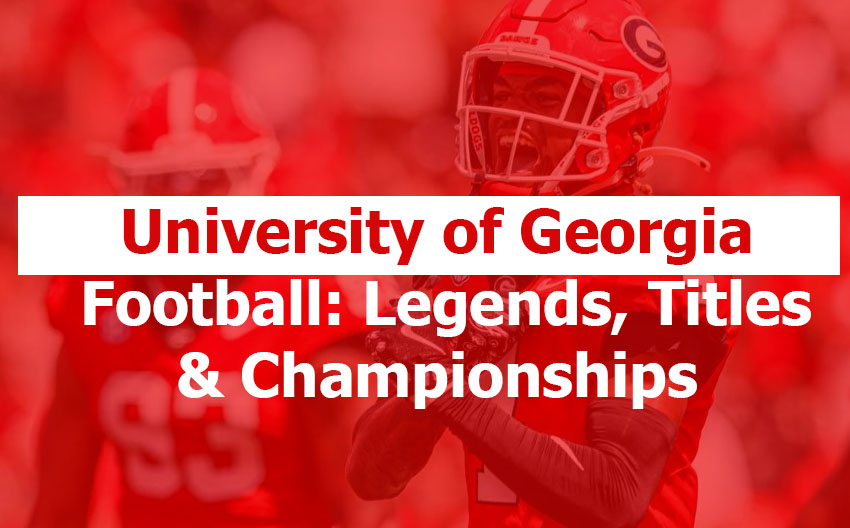
University of Georgia Football: Tradition Forged in Red and Black
To understand Georgia football, one must understand the environment that sustains it. Athens, Georgia, is not a sprawling metropolis; it is a college town shaped by ritual and repetition. On autumn Saturdays, streets fill with red and black long before kickoff. The air hums with expectation, and the hedges surrounding Sanford Stadium frame a stage where generations have tested themselves under national scrutiny. Sanford Stadium’s capacity—over 90,000—places it among the largest in the country, yet its intimacy comes not from architecture but from unity. When “Glory, Glory” echoes through the bowl, the sound carries decades of accumulated belief.
Georgia football is not a recent invention of marketing strategy or television exposure. Its roots extend to 1892, and its evolution mirrors the broader transformation of the sport itself—from leather helmets to high-definition playoff spectacles. Across eras defined by shifting rules and playoff formats, Georgia has sustained relevance by adhering to fundamentals: physical dominance at the line of scrimmage, defensive discipline, and calculated offensive innovation. The Bulldogs’ record books reveal national championships, SEC titles, and a persistent presence among the nation’s elite, reflecting institutional commitment rather than fleeting momentum.
Origins, Foundations, and the Rise to Prominence
Georgia’s football origins are modest but determined. The program’s early decades were marked by regional rivalries and incremental growth. By the mid-20th century, Georgia had established itself as a competitive SEC member, but it was under Vince Dooley that the Bulldogs crystallized a championship identity. Dooley’s tenure, beginning in 1964, emphasized defensive toughness and disciplined execution. His approach did not rely on spectacle; it relied on structure. Players understood assignments. Coaches demanded accountability. The result was sustained competitiveness that laid the groundwork for future triumphs.
The apex of Dooley’s era arrived in 1980, when Georgia captured a national championship behind the transcendent talent of Herschel Walker. Walker’s freshman season remains one of the most electrifying in college football history, blending power, speed, and durability. That championship campaign, documented in NCAA archives, stands as a defining moment in Georgia’s narrative—a convergence of elite individual performance and cohesive team execution.
Yet Georgia’s rise was not confined to a single season. Throughout the 1980s and 1990s, the Bulldogs maintained competitive relevance in an SEC landscape increasingly dominated by emerging powerhouses. Rivalries with Florida Gators football and Auburn Tigers football intensified, embedding Georgia more deeply into the cultural tapestry of Southern football. These rivalries demanded resilience, reinforcing the program’s defensive ethos and recruiting ambition.
Comparison: 1980 Championship Context
| Category | Georgia 1980 | Typical SEC Champion |
|---|---|---|
| Record | 12–0 | 11–1 |
| Offensive Identity | Power run game | Balanced attack |
| Star Player | Herschel Walker | Multiple contributors |
| Final AP Rank | #1 | #1 |
Modern Dynasty Under Kirby Smart
If Vince Dooley provided foundation, Kirby Smart engineered renaissance. Appointed head coach in 2016, Smart—himself a former Georgia defensive back—returned with a blueprint shaped by experience at Alabama under Nick Saban. His mandate was clear: modernize recruiting, intensify defensive complexity, and align institutional resources with championship ambition.
The results materialized emphatically. Georgia secured back-to-back national championships in the 2021 and 2022 seasons, defeating Alabama Crimson Tide football and TCU Horned Frogs football in the College Football Playoff National Championship games. These victories were not narrow escapes; they were demonstrations of depth and structural dominance. Defensive units suffocated elite offenses, while offensive efficiency capitalized on calculated aggression.
Smart’s recruiting strategy redefined Georgia’s talent pipeline. Annual classes consistently rank among the nation’s top three, according to national recruiting services like 247Sports (https://247sports.com). Emphasis on defensive linemen, versatile linebackers, and explosive skill players has created roster depth that withstands injury and attrition. NFL Draft statistics, accessible through https://www.pro-football-reference.com, reveal Georgia’s prolific output of professional talent in recent years.
Comparison: Georgia National Titles (Modern Era)
| Season | Head Coach | Championship Opponent | Margin |
|---|---|---|---|
| 1980 | Vince Dooley | Notre Dame | +7 |
| 2021 | Kirby Smart | Alabama | +15 |
| 2022 | Kirby Smart | TCU | +58 |
Sanford Stadium and Game-Day Culture
Sanford Stadium is more than infrastructure; it is atmosphere incarnate. Nestled in the heart of campus, framed by iconic hedges, the stadium creates a visual identity instantly recognizable across national broadcasts. Renovations have modernized facilities while preserving architectural continuity, balancing heritage with comfort.
Game-day traditions amplify the spectacle. The Dawg Walk—where players march through crowds en route to the stadium—fosters connection between roster and community. The presence of Uga, the live English bulldog mascot, reinforces continuity and pageantry. These rituals are not ornamental; they sustain emotional investment.
Attendance figures consistently rank Georgia among national leaders, reflecting loyalty that transcends generational turnover. Sanford Stadium’s energy is not merely loud; it is coordinated. The choreography of chants, band performances, and defensive third-down eruptions transforms competitive moments into communal experience.
Comparison: Stadium Metrics
| Stadium | Capacity | Conference | Unique Feature |
|---|---|---|---|
| Sanford Stadium | 90,000+ | SEC | Iconic hedges |
| Tiger Stadium (LSU) | 100,000+ | SEC | Night-game intensity |
| Bryant-Denny Stadium | 100,000+ | SEC | Historic dynasty |
Rivalries, Recruiting, and the Future of Georgia Football
Georgia’s annual rivalry with Florida in Jacksonville—often dubbed the “World’s Largest Outdoor Cocktail Party”—remains a defining fixture. Contests against Auburn and Georgia Tech deepen regional complexity. Each rivalry reinforces recruiting narratives and regional pride.
The expanded College Football Playoff format introduces new calculus. Depth will matter more than ever. Rotational defensive lines, multiple quarterback packages, and advanced analytics will define championship trajectories. Georgia’s infrastructure appears well-positioned for sustained contention.
NIL (Name, Image, Likeness) opportunities further reshape recruiting dynamics. Georgia’s brand power, alumni network, and SEC exposure enhance its competitive leverage. Yet success demands vigilance; complacency erodes advantage swiftly in the SEC crucible.
Comparison: Program Strength Indicators
| Metric | Georgia | SEC Average |
|---|---|---|
| National Titles | 4+ | 2–3 |
| Recruiting Rank | Top 3 national | Top 15 |
| NFL Draft Picks (Recent 5 Years) | 40+ | 20–30 |
Final Wrap
University of Georgia football endures because it fuses discipline with ambition. The Bulldogs do not merely react to change; they anticipate it. From Herschel Walker’s 1980 brilliance to Kirby Smart’s modern dynasty, Georgia’s identity remains anchored in physicality, preparation, and collective belief. Between the hedges in Athens, championships are not accidents. They are expectations forged through repetition, pressure, and the refusal to yield.