
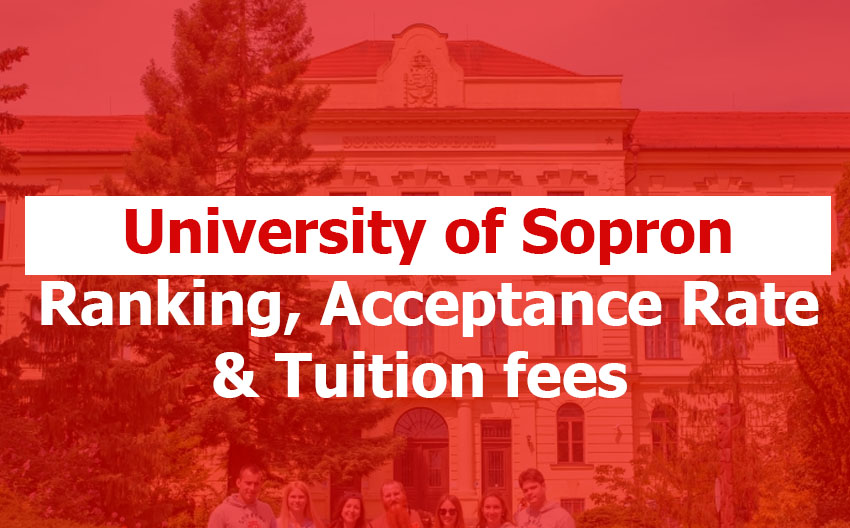
The University of Sopron (Soproni Egyetem) is a historic public university in Sopron, Hungary, founded in the early 18th century, known for strong sustainability performance and applied sciences, especially forestry, wood engineering, environmental science, and education. It appears in global and regional rankings such as the Times Higher Education (THE) Impact Rankings (801–1000 globally, 4th in Hungary) and Eastern Europe rankings (~#80). Its acceptance profile suggests a high admission likelihood when academic criteria are met, tuition for international students ranges by program from roughly $1,850–$3,000+ USD per semester (BSc/MSc), and living costs in Sopron are generally more affordable than in major European capitals.
Admission requires proof of academic records, English proficiency, and supporting documents, typically including personal statements and letters of recommendation.
Rankings and Academic Reputation: Where the University of Sopron Stands
The University of Sopron has long roots stretching back into the early 1700s, and its academic reputation today reflects both that historical depth and an increasingly outward-looking research and sustainability agenda. In global ranking frameworks, Sopron is perhaps best known for its performance in sustainability-oriented indices: in the Times Higher Education (THE) Impact Rankings 2025, which measures contributions to the United Nations’ Sustainable Development Goals (SDGs), the university placed within the 801–1000 bracket globally and impressively 4th among Hungarian universities, outperforming many peers on metrics such as “Life on Land” and “Responsible Consumption and Production.”
This position is significant because THE Impact Rankings include over 2,500 institutions worldwide, making Sopron’s achievement in areas such as climate action, clean water, and sustainable education an important part of its profile, particularly for prospective students whose interests intersect environmental science, sustainability, or applied ecology.
From a more traditional research and academic perspective, institutional rankings such as EduRank place the University of Sopron at around #3314 globally and around #17 within Hungary, with subject placements that include forestry (#652), landscape architecture (#659), and agricultural engineering (#795). These data points show that while Sopron is not yet among the flagship research universities of Europe in broad, high-impact research, it occupies a solid niche in applied sciences and technical disciplines that align with its historic strengths, like forestry, environment, pedagogy, and engineering. Furthermore, specialized placement in the QS Eastern Europe University Rankings around #80 reflects that within its regional context, Sopron competes meaningfully with peer institutions in Central and Eastern Europe.
The thematic emphasis on sustainability, underscored by its UI GreenMetric ranking at #110 worldwide in 2024, is arguably where Sopron’s strategic reputation shines particularly brightly. UI GreenMetric evaluates green campus infrastructure, energy management, water usage, waste reduction, and environmental education, and Sopron’s strong placement shows that it is not only educating students in traditional disciplines but also actively embedding sustainability in campus operations and research. This focus naturally attracts students and scholars interested in environmental management and applications, contributing to a more distinct academic identity within Europe’s higher education landscape.
Within Hungary’s ecosystem, Sopron’s reputation has grown as well: although it does not typically outrank institutions like Eötvös Loránd University (ELTE) or the University of Szeged on broad academic measures, it has carved a recognisable standing in areas tied to its specialisms. Institutions that lead in forestry, environmental engineering, pedagogy, and wood sciences often have stronger domain reputations relative to their overall global rank, and Sopron’s mixed ranking results moderate globally but strong regionally and in specific subjects reflect this academic character.
Finally, it’s worth noting that while broad world rankings provide one lens, prospective students should also examine program-specific indicators, employer perception in niche fields, and research impact relative to their chosen discipline. Sopron’s strategic focus on sustainability, applied sciences, and community relevance means that its academic reputation may be particularly high in those domains even if it remains mid-tier in generalized global league tables.
Acceptance Rate and Competitiveness: How Selective Sopron Really Is
Understanding Sopron’s acceptance rate and admissions competitiveness requires navigating both published estimates and the nature of Hungarian public university admissions, which often do not provide a single “selectivity percentage” as rigidly as U.S. institutions do. Based on aggregated data from education ranking platforms like EduRank, which synthesizes global academic indicators and institutional data, Sopron’s estimated acceptance rate is approximately 76%, though this figure is not an official metric released directly by the university and should be interpreted as reflective of a relatively accessible entry environment compared with far more competitive universities.
This higher estimate makes sense in the context of many European state universities where admission criteria tend to hinge on fulfilling documentation thresholds and programme prerequisites rather than deep comparative ranking across applicants, particularly in non-elite fields.
Sopron’s admissions system is more about meeting eligibility requirements such as academic records, language proficiency, and submission of required documents than about competing against a fixed pool of applicants in a high-stakes ranking battle. A relatively high acceptance estimate like 76% suggests that students who complete the application correctly and meet the minimum academic and language standards have a strong likelihood of receiving admission offers, subject to programme capacity and faculty discretion.
That said, it’s worth emphasising that selectivity can vary by faculty and level of study: disciplines with limited resources, intensive labs, or specialised facilities (such as forestry engineering or environmental technology) may naturally be more discerning or require additional qualifying steps.
For international applicants, competitiveness also arises in the form of meeting language requirements and preparing well-translated documentation. Admission is not purely automatic upon submission of high school or bachelor’s records; meeting minimum thresholds for English proficiency and submitting all required materials, including personal statements or additional essays where requested, are critical components of successful admissions.
According to some application guides, meeting language proficiency at the B2 level (e.g., IELTS band 6.5) is recommended for international students to demonstrate readiness for instruction in English, adding another layer that influences admission outcomes.
In comparison with more exclusive global institutions where acceptance can dip below 20–30% in high-demand programmes, Sopron’s admissions environment appears relatively open while still anchored in academic threshold requirements.
This dynamic makes it particularly attractive to qualified students who might not meet extremely tight cutoffs at elite universities but who have solid educational backgrounds and clear academic goals aligned with Sopron’s programme strengths. Furthermore, the university’s participation in scholarship frameworks such as Hungary’s Stipendium Hungaricum introduces additional competition for funded spots, where academic performance and national allocation quotas elevate selectivity beyond standard admissions.
Overall, Sopron’s acceptance profile is best characterised as moderately accessible but still academically structured: you must demonstrate readiness and meet requirements, but you need not surpass peers in a high-stakes comparative ranking to secure admission to many programmes, especially when your academic record and documentation satisfy entry thresholds.
Minimum GPA and Admission Requirements: What You Need to Be Eligible
For applicants looking at admission to the University of Sopron, understanding minimum academic criteria and the broader application requirements is vital because Hungarian universities generally apply a holistic process that blends academic records with language evidence, recommendation materials, and sometimes additional application essays.
While Sopron, like many European institutions, does not publish a rigid global “minimum GPA cutoff” akin to some North American systems, available secondary sources and international admissions guides indicate that a competitive academic standing is associated with a minimum GPA of around 3.6 on a 4.0 scale, especially for undergraduate applicants. This level suggests that while moderately strong academic performance is expected, the university does not enforce an ultra-high barrier, particularly when admissions committees can also weigh other materials.
Detailed admission guides emphasise that secondary school marks, recommendation letters, personal statements, and English proficiency are crucial components of the application. For bachelor’s applicants, a complete high school transcript showing consistent performance across relevant subjects, particularly in disciplines linked to your chosen field (e.g., sciences for environmental programmes, maths for engineering-related tracks), forms the academic backbone of your application.
Beyond transcripts, many applicants are asked to submit letters of recommendation and personal statements, which allow admissions staff to assess their motivation and readiness for the academic challenges ahead. This holistic approach means that a strong GPA complements but does not singularly determine admissions decisions.
Language proficiency is another pillar of requirements for international applicants. While Hungarian-taught programmes naturally require evidence of Hungarian language competence, English-taught programmes commonly set a minimum B2 level of English proficiency, often demonstrated via standardized tests such as IELTS (minimum ~6.5 bands) or equivalent qualifications (e.g., TOEFL, Cambridge certificates).
Meeting or exceeding this threshold is essential to ensuring that you can follow lectures, participate in discussions, and complete assessments effectively in a non-native language environment. Failure to demonstrate adequate language proficiency can lead to conditional offers at best or outright rejection at worst, even when academic grades are strong.
For postgraduate applicants such as those pursuing an MSc or PhD, requirements shift to include evidence of a relevant bachelor’s degree with solid performance, along with supporting documents such as transcripts, letters of academic or professional reference, research proposals (especially for research-oriented programmes), and sometimes evidence of work or research experience.
While explicit GPA figures are not always listed, showing a record of consistent academic achievement comparable to national equivalency expectations (e.g., a strong class of degree) is generally expected. In fields like environmental engineering or industrial design engineering, having prior study or relevant projects further strengthens your application.
Additionally, some programmes, especially those with a practical or technical orientation, may require entrance exams, portfolio submissions, or subject-specific competency evidence. While not universal across all faculties at Sopron, these additional steps underscore that minimum eligibility is necessary but not always sufficient: demonstrating readiness in specific skills or subject areas can materially influence admission outcomes.
Taken together, the University of Sopron’s admission requirements reflect a structured yet nuanced process in which academic performance, language competence, and thoughtful supporting materials collectively determine eligibility.
Tuition Fees: What It Costs to Study at the University of Sopron
Understanding tuition at the University of Sopron requires examining programme-by-programme fees, as the institution offers a range of degrees across faculties, each with its own cost structure.
According to official tuition information, undergraduate programmes such as a BSc in International Business Economics or Business Administration Management charge approximately $1,850 USD per semester, which would translate to around $3,700 per year if two semesters are attended. Fees rise for specialised programmes: BSc in Timber Industry Engineering is noted at around $3,000 per semester (~$6,000 per year), reflecting additional resource and lab costs associated with applied technical fields.
These figures mean that overall annual tuition for international students at Sopron typically sits in the mid-range compared with many Western European universities, making it an attractive option for students seeking quality education at competitive cost levels.
At the master’s level, tuition varies by discipline but remains broadly structured within a predictable range. An MSc in International Economy and Business, Environmental Engineering, or Nature Conservation Engineering is commonly priced around $2,500–$3,000 per semester, translating to approximately $5,000–$6,000 annually depending on the number of semesters required by the degree.
Programmes in design and creative industries, such as Industrial Product Design Engineering or Eco-Designer, are often priced at $3,000 per semester, hinting that more specialised and intensive programmes command slightly higher tuition a trend consistent with global patterns where specialised skill-based education costs more due to higher teaching and infrastructure expenses.
Doctoral programs at Sopron also have a defined fee structure, with PhD degrees in economics, forestry and wildlife management sciences, or wood sciences & technologies ranging from about $1,850–$3,000 per semester. Because doctoral study often involves original research, access to faculty, and long-term mentorship, these fee structures reflect a balance between accessibility and the intensive resource commitments required by research-oriented education.
It’s worth noting that many Hungarian public universities, including Sopron, operate on semester-based payment systems, where tuition is paid in two installments per academic year. Compared with countries like the United States or the United Kingdom, where annual tuition can reach tens of thousands of euros or pounds for international students, Sopron’s costs — especially in fields like forestry, business, and engineering remain comparatively economical, particularly when coupled with living costs in Sopron that are generally lower than in large European cities.
In addition to base tuition, prospective students should also account for application or administrative fees, which are often required at the time of submission. These fees, small relative to total tuition, cover processing and entry examination costs, and vary by faculty.
Finally, many international students reduce net tuition costs through broader scholarship opportunities, including the Hungarian government’s Stipendium Hungaricum programme, which can cover full tuition and provide additional allowances for living and health insurance. When netted against these funding opportunities, the real cost of the study can be even more accessible for qualified applicants.
Living Costs: Daily Life and Budgeting for Students
One of the compelling aspects of studying at the University of Sopron is the city’s relatively manageable cost of living compared with larger European metropolises, a factor that plays a significant role in total student budgeting. According to cost estimates gathered from student resources, average monthly living expenses in Sopro,n including accommodation, food, transport, and basic personal costs, typically range from approximately €350 to €850 per month for international students.
This broad range reflects variability in housing choices (shared apartments vs student dormitories), lifestyle preferences, and spending patterns.
On the accommodation front, university-provided dormitories or shared student flats often offer the most affordable living option, and many students cite monthly rent for such arrangements in the €150 to €250 band. Private rentals off-campus, particularly those closer to the historic centre of Sopron or larger apartments shared with peers, can push living costs toward the higher end of the range, sometimes €300–€500 per month plus utilities.
What makes Sopron distinctive is that even private housing often remains more affordable than comparable cities in Western Europe due to the town’s lower relative living costs and smaller population base, which reduces demand pressures on rental markets.
Food and groceries are another essential category of student budget planning. Many students report monthly food expenses between €100 and €200 when balancing home-cooked meals with occasional dining out, a figure that aligns with broader Hungarian living cost norms, where groceries and restaurant prices are generally cheaper than in Western European capitals.
Public transportation within Sopro,n which includes buses and local transit, can cost €20–€40 per month, though many students combine cycling or walking with transport passes to reduce costs further. Other monthly expenditures, such as utilities, mobile phone plans, internet, and discretionary personal spending, often fall into the €50–€150 bracket, depending on usage and lifestyle choices.
Importantly, Sopron’s location near the Austrian border and proximity to natural attractions like woodlands and Lake Fertő make it a pleasant place to live, but also a city where infrastructure costs such as transport and lifestyle amenities are not as inflated as in larger capitals. Students can enjoy scenic surroundings, cultural activities, and local events without incurring the high “city premium” typical of places like Vienna or Budapest, which helps overall budget planning.
When you annualise typical living costs, framing them across 9–12 months depending on academic scheduling, many students find that total living expenses in Sopron fall within €4,200–€10,200 per academic year. This figure, while excluding tuition, is a crucial part of the total cost of attendance and underscores why Hungary, and Sopron specifically, is an attractive destination for international learners seeking high-quality education without the intense living cost pressures found elsewhere in Europe.
University of Sopron Rankings Overview
| Ranking System | Placement / Detail |
|---|---|
| THE Impact Rankings 2025 | 801–1000 globally; 4th in Hungary |
| UI GreenMetric 2024 | #110 worldwide; #36 in Europe; 1st in Hungary (transport) |
| EduRank Global | #3314 of 14,131 |
| EduRank Europe | #964 of 2,785 |
| EduRank Hungary | #17 of 43 |
| QS Eastern Europe | ~#80 regional |
Estimated Acceptance & Admission Requirements
| Admissions Aspect | Approximate Profile |
|---|---|
| Estimated Acceptance Rate | ~76% (estimated) |
| Minimum Academic Standing | ~GPA 3.6 (indicative) |
| English Proficiency | B2 English (IELTS ~6.5) |
| Documents Needed | Transcripts, essays, letters of recommendation |
| Short Essays / Personal Statements | Often required |
Typical Tuition Fees (per year / USD)
| Program Type | Approx. Tuition |
|---|---|
| BSc — Business/Economics | ~$3,700/year (~$1,850/semester) |
| BSc — Timber Industry | ~$6,000/year (~$3,000/semester) |
| MSc — Environment/Business | ~$5,000–$6,000/year (~$2,500–$3,000/semester) |
| PhD — Economics | ~$4,000/year onward |
| PhD — Wood Sciences | ~$6,000/year |
Estimated Living Costs (Sopron)
| Expense Category | Monthly Estimate (EUR) |
|---|---|
| Accommodation | ~€150–€500+ |
| Food & Groceries | ~€100–€200 |
| Transportation | ~€20–€40 |
| Utilities & Misc | ~€50–€150 |
| Total Estimated | ~€350–€850 |
Final Wrap
The University of Sopron stands as a distinctive Hungarian higher education institution with deep historical roots, niche academic strengths, and a growing international footprint, particularly in sustainability, environmental science, and applied technical disciplines. Its global and regional rankings underscore a university that is not at the very top of broad academic league tables but is clearly rising in sustainability impact and niche subject areas, achieving recognition in global comparative lists that matter to prospective students.
The acceptance profile suggests a relatively accessible admissions landscape for students who meet documented standards, while its admission requirements reflect a holistic blend of academic records, language proficiency, and personal statements.
Tuition at Sopron is competitive within the European context, offering reasonably priced education in core programmes with clear, published tuition bands that allow students to plan their finances responsibly.
Meanwhile, living costs in the city are often a fraction of those in larger European capitals, making Sopron an attractive option for international students seeking quality education in a comfortable, scenic environment near the Austrian border. From sustainability-focused research opportunities to interdisciplinary applied programmes, Sopron gives students a solid mix of tradition, practicality, and modern global relevance.
Also Check:
Hungary Universities vs Germany Public Universities: Which is Better and Cheapest?
Hungary Universities Tuition Breakdown by Institution: Fees, Differences, and What You Need to Know