
NC university football is not just a Saturday pastime; it is an ecosystem—part cathedral, part laboratory, part economic engine—where tradition meets television contracts and the past argues with the present under bright stadium lights. When we talk about “NC university football,” we are usually referring to the major Division I programs across North Carolina, including the historic battles between University of North Carolina at Chapel Hill, North Carolina State University, Duke University, East Carolina University, and Appalachian State University. Each program carries its own mythology—conference titles, bowl appearances, recruiting pipelines, and fan bases that treat the schedule as sacred text.
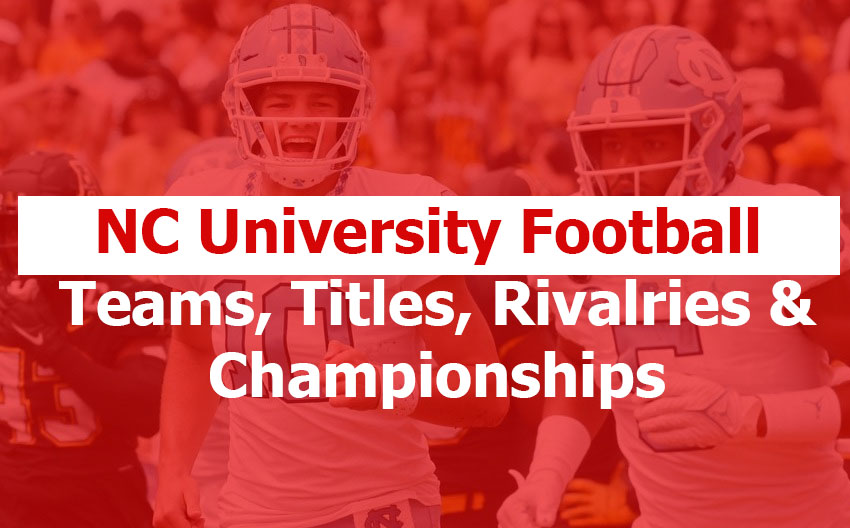
NC University Football: Tradition, Titles, and the Business of Saturday
To understand this landscape properly, you must begin with the structure of the sport itself. College football at the highest level operates under the governance of the National Collegiate Athletic Association, specifically within the Football Bowl Subdivision (FBS). North Carolina programs compete primarily in the Atlantic Coast Conference and the American Athletic Conference, with others in the Sun Belt Conference. These affiliations determine scheduling, revenue distribution, recruiting visibility, and access to postseason play. The structure matters because conference alignment influences everything from television exposure to playoff eligibility.
Before diving into specific programs, remember this: college football is cyclical. Dominance rises and falls with recruiting classes, coaching stability, and administrative patience. It is tempting to judge a program by a single season’s record, but long-term trends—facility investment, academic integration, NIL (Name, Image, Likeness) strategy, and recruiting geography—tell the truer story. Let’s break this down with clarity and depth.
The Major NC University Football Programs: Identity, History, and Competitive Trajectory
The University of North Carolina at Chapel Hill fields the Tar Heels, a program whose identity blends basketball prestige with a football ambition that has periodically flared into national relevance. UNC football has experienced surges under different coaching regimes, with high-profile recruiting classes and offensive innovation propelling them into national rankings in recent years. The program competes in the ACC and plays home games at Kenan Memorial Stadium, a venue that marries southern tradition with modern upgrades. Official program details and season records are documented through the university’s athletics department (https://goheels.com). UNC’s challenge has historically been consistency—sustaining momentum beyond breakout seasons and converting talent into conference championships.
North Carolina State University, known as NC State, represents perhaps the most consistently competitive football identity in the state over recent decades. The Wolfpack have cultivated a culture built on physical defense, disciplined quarterback development, and pragmatic recruiting strategy. Carter-Finley Stadium in Raleigh has become a fortress environment during key ACC matchups. NC State’s strength often lies in developmental depth—turning three-star recruits into all-conference contributors through system continuity. Official athletic records and schedules can be verified through the school’s athletics site (https://gopack.com). Their recruiting footprint frequently targets in-state talent before branching nationally.
Duke University, long associated primarily with basketball dominance, has made strategic investments in football infrastructure over the past decade. Wallace Wade Stadium has undergone renovations, and the program has emphasized academic-athletic balance, recruiting student-athletes who align with Duke’s rigorous academic standards. Duke’s football narrative illustrates a broader truth about NC university football: academic reputation and athletic competitiveness are not mutually exclusive but require careful institutional alignment.
East Carolina University (ECU), competing in the American Athletic Conference, has historically been a disruptor. ECU thrives in underdog scenarios, leveraging passionate regional support and a history of upsetting nationally ranked opponents. Dowdy-Ficklen Stadium routinely becomes a pressure chamber during high-stakes games. ECU’s brand is built on resilience and regional pride, and its alumni network remains deeply invested in football success.
Appalachian State University deserves particular respect in any NC football conversation. Originally rising to national attention through its transition from FCS dominance to FBS competitiveness, App State has sustained success in the Sun Belt Conference and is known for disciplined execution and fearless scheduling. The program’s culture, built in the mountains of Boone, reflects strategic patience and identity continuity—qualities that often elude larger institutions chasing rapid transformation.
Rivalries That Define NC University Football
No serious examination of NC university football can ignore rivalries. Rivalries are the emotional architecture of the sport. The UNC–NC State rivalry, often framed as “The Oldest Rivalry in the South” when UNC faces Virginia, becomes locally electric when Chapel Hill meets Raleigh. These games are not merely conference matchups; they are cultural events shaped by decades of alumni pride and recruiting battles.
The Duke–UNC football rivalry, while overshadowed nationally by basketball, carries historical depth. These programs have contested games since the early 20th century, and football remains an extension of institutional competition. The emotional charge intensifies when both teams are bowl-eligible and postseason positioning is at stake.
NC State versus ECU adds another dimension—Power Five versus Group of Five tension. These games often carry upset potential and regional bragging rights that outlive the season record.
Appalachian State’s non-conference matchups against in-state programs are typically scheduled with caution, because App State has built a reputation for competitive disruption. When mountain grit meets larger conference resources, the result is often closer than recruiting rankings would predict.
Rivalries serve recruiting narratives. High school athletes in North Carolina grow up watching these matchups. Their college decision frequently hinges on which program they see as ascendant in these defining games.
Championships, Bowl Games, and Postseason
Postseason qualification remains one of the clearest measures of program health. Bowl eligibility requires a minimum of six wins, but prestige varies significantly among bowl games. The College Football Playoff (CFP) represents the highest tier, though ACC and American conference champions typically compete for New Year’s Six bowl access.
Below is a simplified comparison table for featured snippet clarity:
NC University Football – Conference & Postseason Snapshot
| University | Conference | Home Stadium | Notable Strength |
|---|---|---|---|
| UNC | ACC | Kenan Memorial Stadium | Offensive recruiting |
| NC State | ACC | Carter-Finley Stadium | Defensive consistency |
| Duke | ACC | Wallace Wade Stadium | Academic-athletic balance |
| ECU | American | Dowdy-Ficklen Stadium | Upset potential |
| App State | Sun Belt | Kidd Brewer Stadium | System continuity |
For official postseason and championship criteria, consult the NCAA website: https://www.ncaa.com.
Bowl participation not only enhances visibility but also increases recruiting leverage and financial distribution. Revenue sharing from conference television contracts has become increasingly central to competitive parity—or disparity—between programs.
Recruiting, NIL, and the Modern Competitive Equation
Recruiting is the lifeblood of NC university football. North Carolina produces significant high school talent, particularly in urban and suburban districts. Programs that dominate in-state recruiting reduce travel costs and deepen alumni connection.
The rise of Name, Image, and Likeness (NIL) policies has altered recruiting calculus. Official NCAA guidance on NIL can be found at https://www.ncaa.org/sports/2021/2/8/name-image-likeness.aspx. NIL collectives now function as informal economic accelerators for recruiting classes. Schools with organized donor networks can create competitive compensation packages within regulatory boundaries.
Facilities also play a decisive role. Modern weight rooms, recovery centers, and multimedia recruiting lounges shape perception. North Carolina institutions have invested heavily in these areas over the past decade.
Coaching stability remains equally critical. Programs with frequent staff turnover often struggle to maintain recruiting pipelines. Continuity fosters trust among high school coaches and prospects.
The Business of NC University Football
College football in North Carolina is not merely sport—it is commerce. Ticket sales, conference television contracts, sponsorship agreements, and alumni donations feed athletic department budgets. ACC media rights agreements distribute revenue among member institutions, shaping competitive resources.
Game-day economics ripple outward. Hotels, restaurants, transportation services, and local vendors benefit from packed stadium weekends. A successful football season can influence university applications and brand visibility.
Below is a simplified comparison for economic perspective:
Economic Influence Snapshot
| Factor | Impact Level | Long-Term Benefit |
|---|---|---|
| TV Revenue | High | Facility upgrades |
| Bowl Appearances | Medium-High | Recruiting leverage |
| Rivalry Games | High | Ticket sales |
| NIL Collectives | Increasing | Talent retention |
Financial health correlates strongly with long-term competitiveness.
The Future of NC University Football
The future of NC university football will likely be shaped by conference realignment, NIL regulation refinement, and potential playoff expansion. Expansion of the College Football Playoff format increases opportunity for ACC representation.
Technological integration—data analytics, sports science tracking, injury prevention modeling—will further refine competitive advantage. Programs investing in analytics departments are often ahead of the curve.
Demographic shifts also matter. As North Carolina’s population grows, high school football talent pools expand. Programs that cultivate early relationships within these pipelines gain structural advantage.
The sport’s cultural power endures because it binds communities. Marching bands, tailgates, alumni reunions—these rituals sustain the ecosystem beyond win-loss records.
Final Perspective
NC university football is tradition under pressure, ambition under lights, and strategy layered over emotion. Each program—UNC, NC State, Duke, ECU, App State—represents a different blueprint for success within the same state boundary. Conference affiliation, recruiting philosophy, NIL organization, and coaching continuity will determine which institutions ascend in the coming decade.
For official information about student-athlete eligibility and governance, always refer to the NCAA (https://www.ncaa.org) and individual university athletic departments.
In the end, Saturday in North Carolina is not just about football. It is about identity—stitched into jerseys, echoed in stadium chants, and carried forward season after season.