
In the first breath of autumn in Ann Arbor, when the leaves turn the color of burnished brass, and the wind sweeps across the Huron River, there is a pulse that beats louder than the season itself. That pulse is University of Michigan football, a program rooted in grit, tradition, and a century-long insistence on excellence. The Michigan Wolverines football represent not merely a university but an idea—an enduring belief that discipline, preparation, and collective will can shape destiny. From the earliest leather-helmet days to the modern era of playoff pressure, the Wolverines have stood as one of the most storied brands in American sport. Official program details and current updates can be found at the University’s athletics site: https://mgoblue.com and historical records are documented through the NCAA at https://www.ncaa.com.
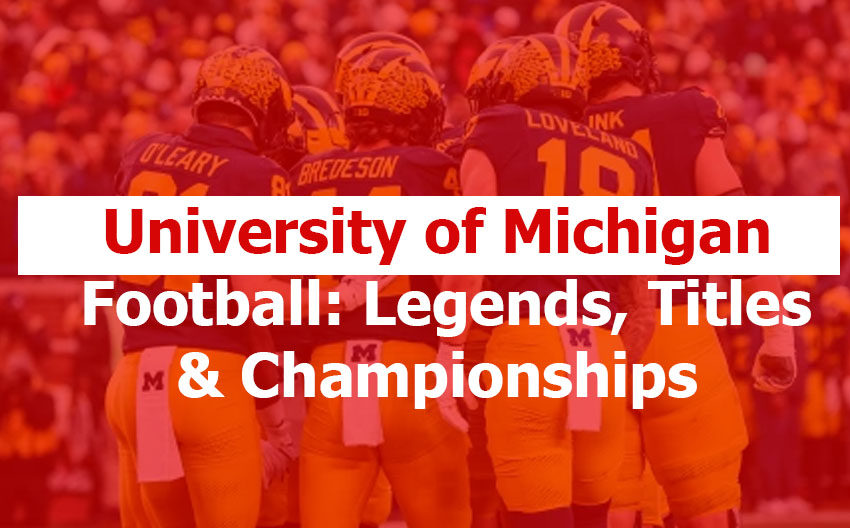
Within the cathedral-like confines of Michigan Stadium—known to the faithful as “The Big House”—over 100,000 voices rise as one, creating a living organism of sound and tradition. It is not merely size that defines this stadium; it is memory. Decades of rivalry clashes, championship runs, and Heisman heroics have unfolded upon its grass. To understand Michigan football is to understand continuity: the passing of playbooks from one generation to the next, the loyalty of alumni, and the relentless drive to measure up to the block “M.” The Big Ten Conference, detailed at https://bigten.org, remains the battleground where this legacy is tested annually.
University of Michigan Football: The Origins and Rise of a Powerhouse
The story begins in 1879, long before television contracts and playoff brackets. Michigan football emerged in an America still shaping its identity, and the sport itself was a rough, experimental cousin of rugby. By the turn of the 20th century, under the legendary Fielding H. Yost, Michigan became a juggernaut. Yost’s “Point-a-Minute” teams between 1901 and 1905 overwhelmed opponents with innovation and ruthless efficiency, redefining offensive strategy. These squads were not merely winning; they were constructing the blueprint for organized dominance. Historical statistics from that era can be explored via the College Football Data Warehouse archives and the Bentley Historical Library at https://bentley.umich.edu.
Yost’s influence stretched beyond wins and losses. He institutionalized the idea that football was an extension of academic rigor—preparation, study, adaptation. Michigan claimed multiple national titles in the early decades, establishing itself as a benchmark for excellence. While the methods of conditioning and play design have evolved, the ethos remains strikingly similar. Excellence is not an accident; it is engineered. Michigan’s official record books reflect over 1,000 all-time wins, a milestone that situates the Wolverines among the winningest programs in college football history.
The rise continued under coaches like Bo Schembechler, whose arrival in 1969 ignited a new chapter. Schembechler embodied discipline and fierce loyalty, transforming Michigan into a perennial Big Ten champion. His philosophy was simple yet uncompromising: control the line of scrimmage, protect the football, and outwork everyone. The rivalry with Ohio State Buckeyes football intensified under his watch, cementing one of sport’s fiercest annual confrontations.
Championships, Honors, and Defining Achievements
Michigan’s championship pedigree is not folklore; it is documented achievement. The Wolverines claim multiple national championships recognized by various selectors and have secured dozens of Big Ten titles. These are not ornamental accolades. They are markers of consistency across eras defined by different rules, scholarship limits, and postseason formats. Official national championship data can be cross-referenced at https://www.ncaa.com/history/football/fbs.
A particularly luminous chapter arrived in the College Football Playoff era when Michigan captured the 2023 national championship under Jim Harbaugh, culminating in victory at College Football Playoff National Championship. That triumph was not simply a trophy; it was vindication after years of near misses and relentless rivalry battles. It symbolized adaptation—Michigan modernizing its offensive schemes while preserving its physical identity.
Individual brilliance has punctuated team success. Charles Woodson remains the only primarily defensive player to win the Heisman Trophy (1997), a feat that underscores Michigan’s commitment to complete football. The Wolverines have produced dozens of All-Americans and first-round NFL draft selections, reinforcing the program’s pipeline to professional excellence, documented through https://www.pro-football-reference.com.
Comparison: Michigan Championships
| Category | Michigan Wolverines | Big Ten Average | National Elite Benchmark |
|---|---|---|---|
| National Titles | 11+ claimed | 3–4 typical | 10+ elite tier |
| Big Ten Titles | 40+ | 5–10 typical | 30+ historic power |
| All-Time Wins | 1,000+ | 600–800 | 900+ |
The Rivalries That Shape Identity
College football without rivalry is like chess without tension. Michigan’s annual showdown with Ohio State, often referred to simply as “The Game,” stands as perhaps the sport’s most visceral conflict. Since 1897, these two titans have battled for conference supremacy and national positioning. The stakes frequently transcend rankings; they involve pride, recruiting dominance, and generational memory. Historical data is archived at https://www.sports-reference.com/cfb/.
The rivalry with Michigan State Spartans football adds intrastate complexity. Known for unpredictability and emotional intensity, this clash reminds fans that proximity breeds both familiarity and friction. Each contest becomes a referendum on momentum and morale.
Then there is tradition-rich competition against Notre Dame Fighting Irish football, a series that bridges regional loyalty and national spotlight. These rivalries are not merely annual fixtures; they are cultural rituals passed down like heirlooms.
Comparison: Key Rivalries
| Rival | First Meeting | All-Time Edge | Cultural Impact |
|---|---|---|---|
| Ohio State | 1897 | Close margin | National spotlight |
| Michigan State | 1898 | Competitive | In-state pride |
| Notre Dame | 1887 | Historic parity | National tradition |
The Big House—Engineering Awe
At over 107,000 seats, Michigan Stadium remains the largest stadium in the United States. Its design prioritizes proximity and acoustics, creating a bowl that traps sound and magnifies energy. Renovations have modernized amenities while preserving its iconic silhouette.
Game days become civic ceremonies. Tailgates begin before sunrise; marching band formations trace geometric precision across the field. The Wolverines’ fight song reverberates through a structure that feels less like concrete and more like collective memory.
Attendance records consistently place Michigan at or near the top nationally, reflecting loyalty that persists through rebuilding years and championship seasons alike. The stadium stands as proof that tradition, when nurtured carefully, does not erode—it compounds.
Modern Era, Recruiting & The Future
Contemporary Michigan football operates within a landscape shaped by NIL (Name, Image, Likeness), transfer portals, and expanded playoffs. The program has adapted, leveraging national recruiting pipelines and analytics-driven strategy. Official recruiting updates can be found at https://mgoblue.com and national rankings via https://247sports.com.
Strength and conditioning science now integrates biometric tracking and recovery protocols unimaginable to Yost or Schembechler. Yet the philosophical throughline remains constant: win the line, protect the ball, respect the rivalry.
The expanded College Football Playoff format introduces both opportunity and peril. Depth becomes paramount. Scheduling strategy matters more than ever. Michigan’s recruiting classes consistently rank among the Big Ten’s best, ensuring the Wolverines remain positioned to compete deep into January.
Comparison: Modern Program Metrics
| Metric | Michigan | Big Ten Avg | CFP Contender Benchmark |
|---|---|---|---|
| Recruiting Rank | Top 15 national | Top 30 | Top 10 |
| Stadium Capacity | 107,000+ | 75,000 avg | 100,000+ elite |
| CFP Appearances | Multiple | 1–2 typical | 3+ elite tier |
-
“Michigan Wolverines football rivalry game vs Ohio State”
- Ole Miss vs MSU
University of Michigan football endures because it marries stubborn tradition with disciplined evolution. Programs rise and fall on trends; Michigan persists on identity. In a sport addicted to reinvention, the Wolverines remind us that foundations matter. When over 100,000 voices rise beneath the Ann Arbor sky, they are not cheering for novelty—they are honoring continuity. And continuity, in the long run, wins.