
Few programs in American sport carry the elemental force of the University of LSU football. In Baton Rouge, football is not a pastime; it is ritual, inheritance, and communal identity braided into one roaring spectacle. The LSU Tigers football represent Louisiana State University on the national stage, competing in the brutal arena of the Southeastern Conference (SEC), widely regarded as the most demanding conference in college football. Official athletic information and records are available through LSU Athletics at https://lsusports.net, while conference governance and championship documentation can be explored at https://www.secsports.com and the national governing body, the NCAA, at https://www.ncaa.com.
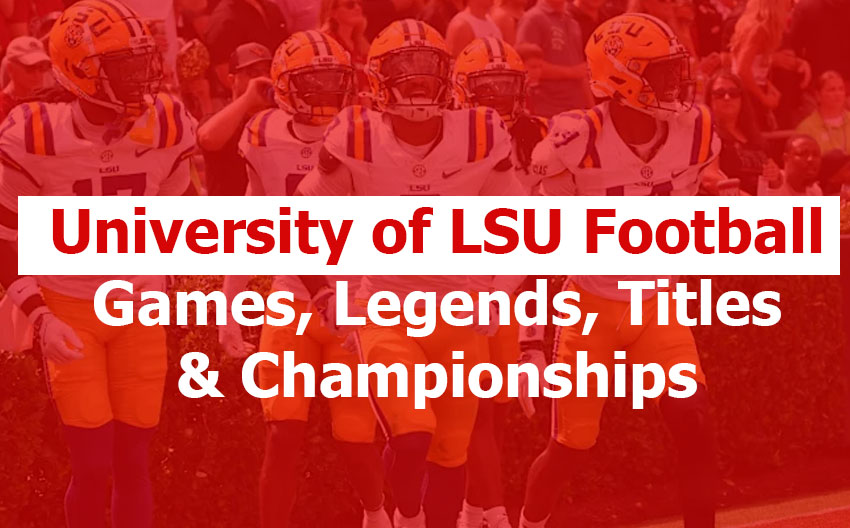
To understand LSU football is to understand geography, heat, and pressure. Tiger Stadium, known universally as Death Valley, is less a venue and more a force of nature. Saturday nights in Baton Rouge vibrate with a density of sound that visiting coaches routinely describe as disorienting. The spectacle is measurable; decibel readings in Tiger Stadium have ranked among the loudest in college football history. Yet the magic is not only sonic. It is cultural. Tailgates spill into the afternoon with Cajun cooking, brass band echoes, and generational loyalty. LSU football does not merely entertain; it binds.
From its early 20th-century beginnings through its modern championship runs, LSU has consistently adapted to the changing architecture of the sport—scholarship limits, bowl systems, playoff formats—while maintaining a ruthless physical identity. The Tigers have claimed multiple national championships across distinct eras, proving that their success is not the byproduct of a fleeting trend but of institutional resolve. Historical championship data is archived by the NCAA’s official records page, and statistical deep dives can be accessed via Sports Reference at https://www.sports-reference.com/cfb/. LSU’s narrative is one of persistence under the brightest lights, a program forged in humidity and expectation.
Foundations of LSU Football—Early Years to SEC Power
LSU football began in 1893, modestly, without the pomp that now surrounds it. Early teams played regional opponents on uneven fields, and the sport itself was still evolving from rugby’s rough scaffolding. But Louisiana possessed something rare: a deep well of competitive pride. By the 1930s, under coach Bernie Moore, LSU began to carve a more serious identity, culminating in its first claimed national championship in 1958 under Paul Dietzel. That 1958 team, known for its “three-platoon system,” was tactically innovative, reflecting a willingness to experiment strategically in pursuit of dominance.
The postwar decades saw LSU embed itself firmly within the SEC hierarchy. Competing annually against programs like Alabama Crimson Tide football and Florida Gators football demanded resilience. The SEC was not forgiving; it was Darwinian. Depth charts mattered. Recruiting mattered. Conditioning mattered. LSU learned to treat each conference game as a referendum on legitimacy. Official SEC historical standings, archived at SECSports.com, demonstrate how LSU gradually transformed from contender to consistent powerhouse.
The 21st century accelerated that transformation. Under Nick Saban in the early 2000s, LSU captured the 2003 national championship, defeating Oklahoma Sooners football in the BCS National Championship Game. That title signaled LSU’s arrival as a modern titan. Saban’s emphasis on defensive complexity and recruiting infrastructure laid the foundation for sustained excellence. His successor, Les Miles, added a 2007 national championship, reinforcing LSU’s capacity to win across coaching transitions.
National Championships and Signature Seasons
LSU’s championship lineage spans multiple systems: pre-BCS polls, the BCS era, and the College Football Playoff. The 2019 season under Ed Orgeron stands as one of the most statistically explosive campaigns in college football history. Quarterback Joe Burrow delivered a record-breaking performance, culminating in victory over Clemson Tigers football in the College Football Playoff National Championship. Official box scores and award details are available at NCAA.com and CFP’s official site, https://collegefootballplayoff.com.
That 2019 offense redefined SEC expectations. LSU, long associated with bruising defense and conservative offense, suddenly became a vertical, high-tempo juggernaut. Burrow captured the Heisman Trophy in commanding fashion, a reminder that LSU’s evolution did not erase tradition—it refined it. The Tigers demonstrated that power football and passing innovation need not be adversaries.
Across its championship seasons—1958, 2003, 2007, and 2019—LSU exhibited adaptability. Coaching philosophies changed, offensive schemes evolved, but competitive ferocity endured. The program’s ability to recalibrate while preserving its edge underscores a broader truth: championships are rarely accidents. They are accumulations of recruiting foresight, cultural cohesion, and institutional backing.
Featured Snippet Comparison: LSU National Championships
| Season | Head Coach | Championship Format | Signature Win |
|---|---|---|---|
| 1958 | Paul Dietzel | AP/Coaches Poll | vs Clemson |
| 2003 | Nick Saban | BCS | vs Oklahoma |
| 2007 | Les Miles | BCS | vs Ohio State |
| 2019 | Ed Orgeron | CFP | vs Clemson |
Architecture of Intimidation
Tiger Stadium, opened in 1924, has expanded repeatedly to accommodate one of the nation’s most fervent fan bases. With a capacity exceeding 100,000, it ranks among the largest stadiums in college football. Its nickname, “Death Valley,” is not metaphorical bravado. Visiting teams consistently cite night games in Baton Rouge as uniquely punishing environments. Crowd noise measurements have reached levels comparable to industrial machinery, and the psychological weight of purple-and-gold unity is palpable.
The design of the stadium amplifies acoustics, creating a bowl effect that traps and reverberates sound. Night games, illuminated against humid Louisiana skies, generate a cinematic intensity unmatched in many venues. LSU’s official facilities page at LSUsports.net details recent renovations, including upgraded locker rooms and fan amenities, balancing tradition with modern comfort.
Attendance figures routinely place LSU among national leaders, reflecting the Tigers’ broad cultural reach across Louisiana and beyond. Football Saturdays become civic festivals, with tailgating traditions rooted in Cajun culinary heritage. Gumbo and jambalaya simmer alongside pregame rituals, blending sport and regional identity in a way few programs replicate.
Comparison: Stadium Metrics
| Stadium | Capacity | Conference | Notable Trait |
|---|---|---|---|
| Tiger Stadium (LSU) | 100,000+ | SEC | Elite night atmosphere |
| Bryant-Denny Stadium | 100,000+ | SEC | Championship pedigree |
| Ohio Stadium | 100,000+ | Big Ten | Historic rivalry games |
Rivalries, Recruiting, and the Road Ahead
LSU’s fiercest rivalries define its competitive ecosystem. Annual clashes with Alabama frequently carry national championship implications, shaping playoff narratives. Games against Auburn Tigers football and Texas A&M Aggies football intensify SEC West dynamics. Each rivalry reinforces LSU’s identity as a program unafraid of confrontation.
Recruiting remains the lifeblood of sustained dominance. Louisiana itself is fertile recruiting territory, producing elite high school talent annually. LSU’s strategy combines in-state loyalty with national reach, leveraging NIL opportunities and NFL development pipelines. Draft statistics, accessible via https://www.pro-football-reference.com, reveal LSU’s prolific presence in professional football, particularly at defensive back and wide receiver.
The future unfolds under the evolving realities of expanded playoffs and NIL economics. LSU’s adaptability will be tested again. Depth, roster management, and cultural cohesion will matter as much as play-calling innovation. If history offers guidance, LSU will not retreat from change; it will absorb it and respond with amplified intensity.
Comparison: Program Strength Indicators
| Metric | LSU | SEC Average | CFP Benchmark |
|---|---|---|---|
| National Titles | 4 modern era | 2–3 typical | 4+ elite |
| Stadium Capacity | 100,000+ | 80,000 avg | 100,000+ |
| NFL Draft Picks (Recent Decade) | 80+ | 50–60 | 70+ elite |
Final Wrap
LSU football thrives because it embraces pressure rather than fleeing it. In the SEC crucible, where expectations scorch and reputations are tested weekly, the Tigers have forged championships out of heat and noise. Baton Rouge does not apologize for ambition. It demands it. And as long as Death Valley roars beneath humid night skies, LSU will remain not merely a participant in college football’s grand drama, but one of its principal architects.