
The Harvard Scholars at Risk Fellowship 2027–2028 is an opportunity for scholars, researchers, writers, artists and independent intellectuals who face threats or persecution because of their academic work, beliefs, identity or exercise of fundamental human rights.
Hosted by Harvard University’s Scholars at Risk Program in the United States, the fellowship provides a safer academic environment where selected individuals can continue their research, writing, teaching or other scholarly activities without facing the same threats they experience in their home countries.
The programme is particularly important for individuals whose academic freedom, personal safety or ability to express their ideas has been threatened.
Successful fellows may receive financial support, health insurance and travel assistance, allowing them to continue their intellectual and professional work in a safer environment.
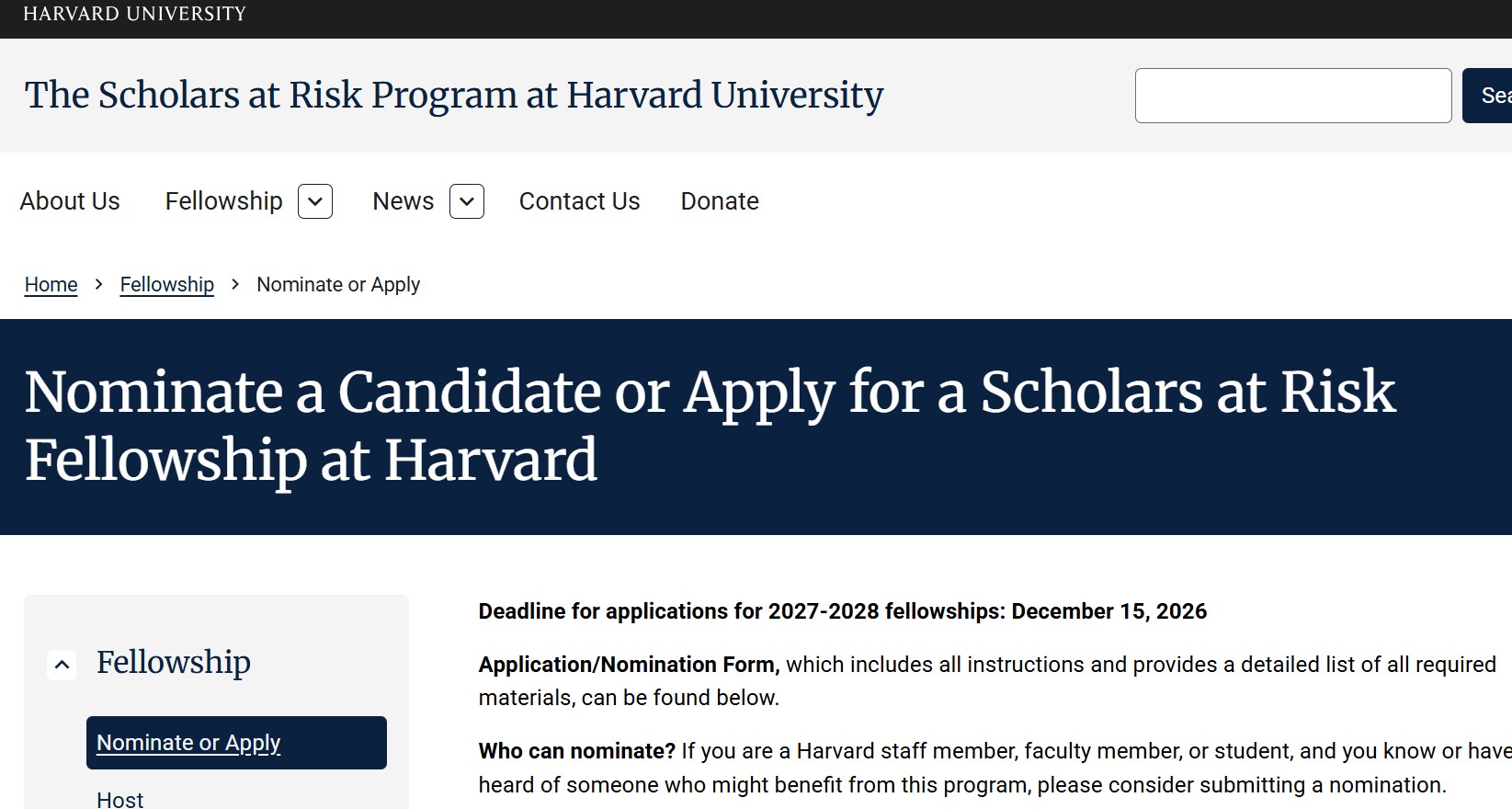
Applications for the 2027–2028 fellowship cycle have a deadline of 15 December 2026. Interested scholars should review the eligibility requirements and application instructions before submitting their applications.
Harvard Scholars at Risk Fellowship 2027–2028: Overview
| Details | Information |
|---|---|
| Host institution | Harvard University |
| Programme | Scholars at Risk Fellowship |
| Study destination | Cambridge, Massachusetts, USA |
| Fellowship period | 2027–2028 |
| Duration | Up to 10 months or one year |
| Financial support | Stipend, insurance and travel |
| Eligible applicants | At-risk scholars, writers, artists and intellectuals |
| Application opening | Application form available |
| Deadline | 15 December 2026 |
| Official application | Apply or nominate |
About the Harvard Scholars at Risk Fellowship
The Harvard Scholars at Risk (SAR) Program is designed to support accomplished scholars and intellectuals whose safety or freedom to pursue their work has been threatened.
The programme provides temporary academic placements within Harvard University, allowing selected fellows to continue their research, scholarly activities or artistic interests in a safer environment.
The fellowship recognises that individuals can face persecution because of their academic research, public statements, beliefs, identity or exercise of fundamental human rights.
Importantly, applicants do not necessarily have to be recognised refugees to qualify. The programme considers individuals who face credible risks of repression or punishment because of their work or identity.
Selected fellows are hosted by suitable academic departments, centres or institutes within Harvard, depending on their academic background and area of expertise.
The programme is not intended primarily as a platform for political campaigning. Its main purpose is to protect academic freedom and provide scholars with the opportunity to continue their intellectual work.
What Does the Harvard Scholars at Risk Fellowship Cover?
The Harvard Scholars at Risk Fellowship provides financial and institutional support to help selected scholars continue their work in the United States.
According to Harvard’s official fellowship information, the benefits include:
1. Financial stipend
Selected fellows receive a stipend to support their living expenses during the fellowship period.
2. Health insurance
The programme provides insurance coverage for fellows. Harvard also indicates that it is usually able to support insurance for eligible dependants.
3. International travel support
Travel assistance is provided depending on the fellow’s location and the number of dependants travelling with them.
4. Academic research environment
Fellows are hosted by an appropriate Harvard department, centre or institute, where they can continue their scholarly or artistic interests.
5. Visa support
Most fellows come to Harvard through the programme using J-1 research scholar visas. Applicants with pending asylum applications must have work authorisation before beginning a fellowship.
6. Post-fellowship support
Harvard Scholars at Risk engages with fellows from their arrival to explore possible next steps. This may include helping them identify other academic placements or accommodation for the period after the fellowship.
Important: The fellowship is temporary. At the end of the placement, fellows are expected to return to their home country or seek another placement elsewhere.
Harvard Scholars at Risk Fellowship Eligibility Requirements 2027–2028
The Harvard Scholars at Risk Fellowship is not a general scholarship for anyone interested in studying at Harvard. It is specifically intended for accomplished scholars and intellectuals who face persecution or threats to their safety.
To qualify, applicants must demonstrate both an appropriate scholarly background and a genuine risk related to their beliefs, scholarship or identity.
The following are the main eligibility considerations.
1. Applicants must face persecution or threats
Candidates must demonstrate that they face a risk of repression or punishment because of their academic work, beliefs, identity or exercise of fundamental human rights.
2. Academic or professional background
Applicants must meet appropriate academic standards in their respective fields.
The programme also recognises writers, artists, thinkers and independent intellectuals who pursue scholarly work, even if they are not employed by a university.
3. International applicants are welcome
Applicants from different countries can apply. The programme does not restrict applications to a particular nationality.
However, applicants who already have permanent residency in a safe country outside their home country may be ineligible, depending on their circumstances.
4. U.S. citizens and permanent residents are not eligible
Applicants who are United States citizens or permanent residents of the United States cannot apply for this fellowship.
5. Applicants must meet immigration requirements
Successful applicants must satisfy the relevant immigration and visa requirements for their placement in the United States.
6. Students seeking admission to Harvard are not eligible
The fellowship does not provide admission into Harvard degree programmes. Individuals who simply want to continue their studies or receive academic training at Harvard should consider other opportunities.
Can writers, artists and independent researchers apply?
Yes. Harvard uses a broad definition of a scholar. Writers, artists, thinkers and independent intellectuals may qualify if they pursue scholarly or artistic work and meet the programme’s selection criteria.
Required Documents for the Harvard Scholars at Risk Fellowship
Applicants should carefully review the official application and nomination form because it contains the complete list of required materials and submission instructions.
You should be prepared to provide information demonstrating your academic background, professional achievements and the risks you face.
In particular, applicants should be ready to explain:
-
Their academic or professional qualifications.
-
Their research, scholarly or artistic activities.
-
Their experience and achievements in their respective fields.
-
The threats, persecution or restrictions affecting their work or personal safety.
-
Why they need a safe academic environment to continue their work.
Provide accurate and verifiable information. Harvard’s selection committee may check applicants’ credentials and verify the circumstances surrounding the risks they report.
How to Apply for the Harvard Scholars at Risk Fellowship 2027–2028
Interested scholars can apply directly or be nominated by another person.
Harvard does not require applicants to receive a nomination before applying. Self-applications are accepted.
Follow these steps:
Step 1: Visit the official fellowship website
Go to the Harvard Scholars at Risk Fellowship webpage and review the programme information.
Step 2: Check your eligibility
Confirm that you meet the programme’s scholarly requirements and face the type of risk considered by Harvard Scholars at Risk.
Step 3: Access the application form
Visit the official nomination and application page. Select the application or nomination form and read the instructions carefully.
Step 4: Complete the application
Provide the requested personal, academic and risk-related information. Explain your circumstances clearly and include the supporting materials requested.
Step 5: Submit your application
Complete the application through the official process before the stated deadline.
Step 6: Wait for the selection decision
Applications are reviewed by the Harvard Scholars at Risk Faculty Committee. Due to the volume of applications, candidates may not receive a decision until early spring.
Successful applicants will receive further information about their fellowship arrangements and placement.
Official Application Link
Interested applicants should use Harvard University’s official website to access the application and nomination form.
Application: Apply or Nominate for the Fellowship
Programme information: Visit the Official Fellowship Page
Harvard Scholars at Risk Fellowship 2027–2028 Application Deadline
The application deadline for the 2027–2028 Harvard Scholars at Risk Fellowship is:
FINAL APPLICATION DEADLINE
15 December 2026
FAQs
1. Is the Harvard Scholars at Risk Fellowship fully funded?
The fellowship provides a stipend, insurance coverage and travel assistance. The amount of financial support depends on the individual fellowship arrangements and circumstances.
2. Can Nigerians apply for the Harvard Scholars at Risk Fellowship?
Yes. Applications are accepted from different countries, including Nigeria. However, applicants must demonstrate that they face persecution or threats because of their scholarship, beliefs or identity and meet the programme’s academic standards.
3. Can I apply without a PhD?
The programme does not state a universal PhD requirement. However, applicants must demonstrate appropriate academic standing in their respective fields.
4. Can I apply without being employed by a university?
Yes. Writers, artists, independent intellectuals and thinkers may qualify even if an academic institution does not employ them.