
The Atlantic Fellows for Social and Economic Equity programme at the London School of Economics and Political Science (LSE) is accepting applications for its 2027-2028 fellowship year. The programme brings together individuals from different professional and academic backgrounds who are committed to addressing inequality and promoting more inclusive societies.
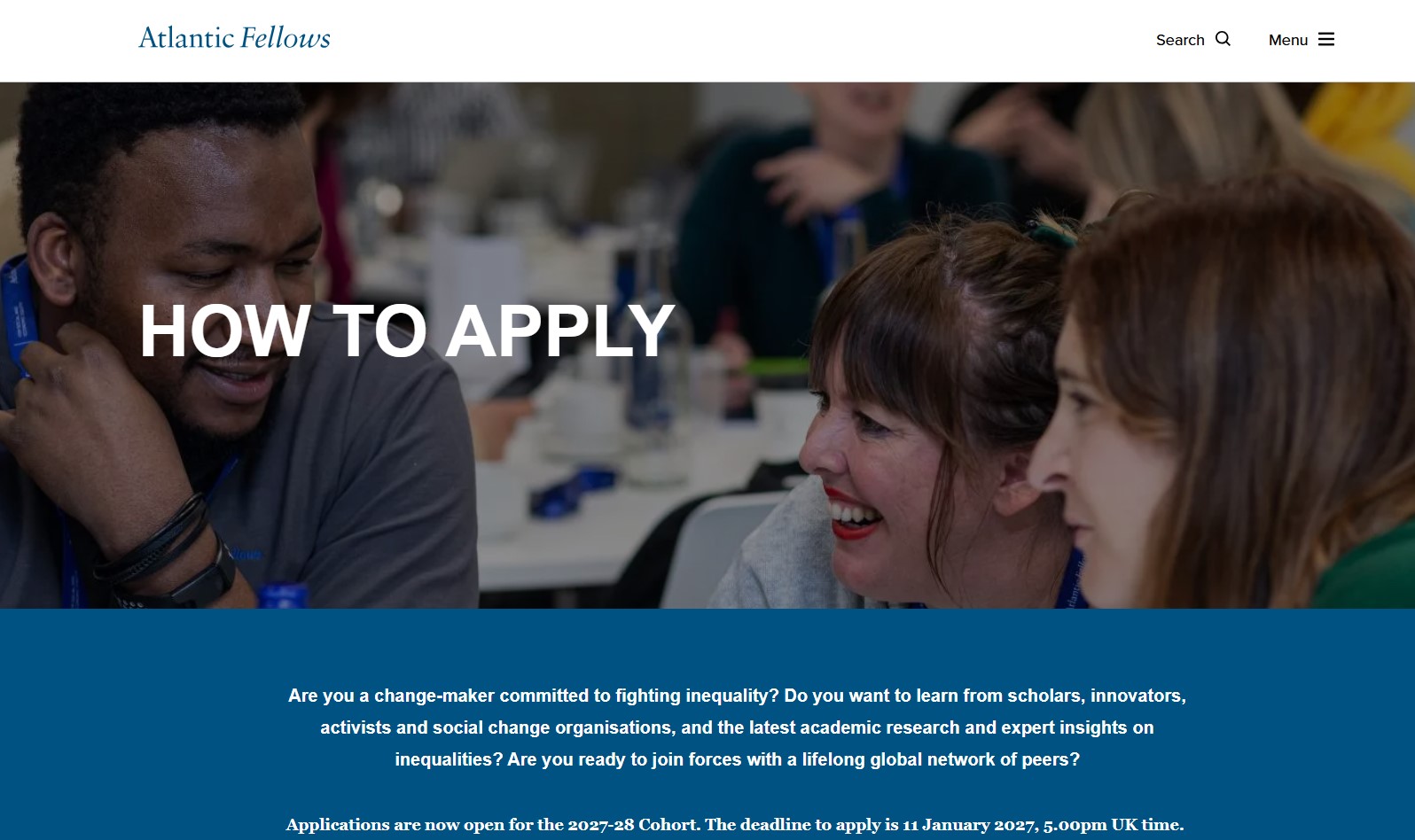
The fellowship is designed for people working to challenge social and economic inequalities through research, activism, policymaking, community development and other forms of social change. Participants become part of an international network of fellows and engage with academic experts, practitioners and organisations working on inequality-related issues.
The programme offers two pathways: a residential track and a non-residential track. The residential option includes studying for an MSc in Inequalities and Social Science at LSE, while the non-residential option involves a Postgraduate Certificate in Social and Economic Equity.
Applications are open to qualified candidates from around the world, particularly those with significant experience in addressing inequality.
Overview of the Atlantic Fellows for Social and Economic Equity
| Details | Information |
|---|---|
| Fellowship Name | Atlantic Fellows for Social and Economic Equity |
| Host Institution | London School of Economics and Political Science |
| Host Country | United Kingdom |
| Fellowship Year | 2027-2028 |
| Available Tracks | Residential and Non-Residential |
| Study Level | Master’s and Postgraduate Certificate pathways |
| Eligible Applicants | Experienced professionals and change-makers |
| Minimum Experience | 7 years |
| Application Deadline | 11 January 2027, 5 pm UK time |
| Application Status | Open |
About the Fellowship
The Atlantic Fellows for Social and Economic Equity programme is based at the International Inequalities Institute at LSE. It aims to develop a global community of people working to understand and challenge the causes of inequality.
The programme brings together activists, policymakers, researchers, practitioners, artists and other professionals who want to contribute to social and economic change.
Participants learn from academic research and practical experiences while developing their own approaches to tackling inequality. The fellowship also provides opportunities to exchange ideas and build relationships with people working in different countries and sectors.
The residential track allows fellows to study the MSc in Inequalities and Social Science at LSE during their active fellowship year. The non-residential track leads to a Postgraduate Certificate in Social and Economic Equity.
Benefits of the Fellowship
The programme provides selected fellows with:
- Access to academic teaching and research on social and economic inequality.
- Opportunities to learn from scholars, activists and experienced practitioners.
- Membership in an international network of fellows working to challenge inequality.
- Opportunities to exchange ideas and develop collaborative projects.
- Academic training through the residential or non-residential study pathway.
- Opportunities to strengthen leadership, research and practical approaches to social change.
The programme is described by LSE as fully funded. However, applicants should review the official funding and track information to understand the support available for their specific circumstances.
Eligibility Requirements
Applicants interested in the 2027-2028 fellowship must:
- Have at least seven years of relevant professional or practical experience.
- Demonstrate a commitment to challenging social and economic inequality.
- Meet LSE’s English language requirements.
- Show how their work relates to the programme’s objectives and values.
- Demonstrate a clear vision for the impact they want to achieve.
- Be willing to contribute to and learn from the wider Atlantic Fellows community.
Applicants choosing the residential track must also meet the admission requirements for the MSc in Inequalities and Social Science at LSE.
The programme welcomes applications from different professional backgrounds, and applicants do not necessarily need to follow a traditional academic career path.
Required Application Documents
Applicants should prepare:
- An updated curriculum vitae.
- Academic transcripts or a document explaining that they do not hold an undergraduate degree, where applicable.
- A statement of academic purpose explaining their experience, motivation, and future goals.
- Two references.
- Evidence that they meet the required English language standards.
The specific statement requirements differ between the residential and non-residential tracks. Applicants should consult the relevant guidance before preparing their statements.
How to Apply for the Atlantic Fellows Programme
Interested candidates can apply through the LSE Graduate Application System.
- Visit the official Atlantic Fellows application page.
- Read the eligibility and selection requirements for both fellowship tracks.
- Decide whether the residential or non-residential pathway is appropriate for your background and goals.
- Start an online application through the LSE Graduate Application System.
- Prepare your statement of academic purpose and CV.
- Upload your academic transcripts or the relevant alternative document.
- Nominate two referees and ensure that their references are submitted within the required period.
- Provide evidence of English language proficiency where required.
- Review your application and submit it before the deadline.
Applicants are encouraged to begin early because obtaining academic records and references may take time.
Atlantic Fellows Deadline
The application deadline for the Atlantic Fellows for Social and Economic Equity 2027-2028 programme is 11 January 2027 at 5:00 pm UK time.
Applicants invited for interviews are expected to be notified in March 2027, while final decisions are expected in April 2027.
Atlantic Fellows Official Website
For further information and application instructions, visit:
https://afsee.atlanticfellows.lse.ac.uk/en-gb/apply
Frequently Asked Questions
1. Who can apply for the Atlantic Fellows programme?
Professionals and change-makers with at least seven years of experience who are committed to challenging inequality can apply, provided they meet the other requirements.
2. Is the fellowship fully funded?
LSE describes the programme as fully funded. Applicants should review the official funding information for the details relevant to their selected track.
3. What is the difference between the two fellowship tracks?
The residential track includes an MSc in Inequalities and Social Science at LSE, while the non-residential track leads to a Postgraduate Certificate in Social and Economic Equity.
4. Do applicants need to take an English test before applying?
The official application guidance states that applicants do not have to sit an English-language test before submitting their application. However, they must meet LSE’s English language requirements.
CHECK THESE OUT:
EPOG Erasmus Mundus Joint Master 2027-2029
STIAS Iso Lomso Fellowship 2028 – Apply Now!
Houghton Library Visiting Fellowships 2027-2028 (Apply Now!)
CEGA Fellowship Program 2027-2028 (Apply Now!)